
Lighting has quietly become one of the most transformative elements in modern luxury home design. It no longer simply illuminates a room — it shapes mood, defines architecture, supports well-being, and brings a home’s aesthetic vision to life. At the center of this transformation sits one of the most exciting innovations in modern illumination: linear lighting. From kitchen islands and architectural ceilings to staircases, hallways, outdoor facades, and integrated smart home environments, linear lighting has emerged as the design language of the future — flexible, energy-efficient, breathtakingly elegant, and seamlessly integrated with the way we actually live.
This guide from Homeva explores why linear lighting has become the go-to solution for designers, architects, builders, and discerning homeowners across Austin and beyond, the latest trends shaping the lighting industry, the diverse applications transforming today’s most sophisticated spaces, and what to consider when planning linear lighting for your next project. Whether you’re building a custom home in Austin’s Westlake hills, renovating in Tarrytown, or designing a contemporary masterpiece in Barton Creek, this is the most complete guide you’ll find on the future of luxury illumination.
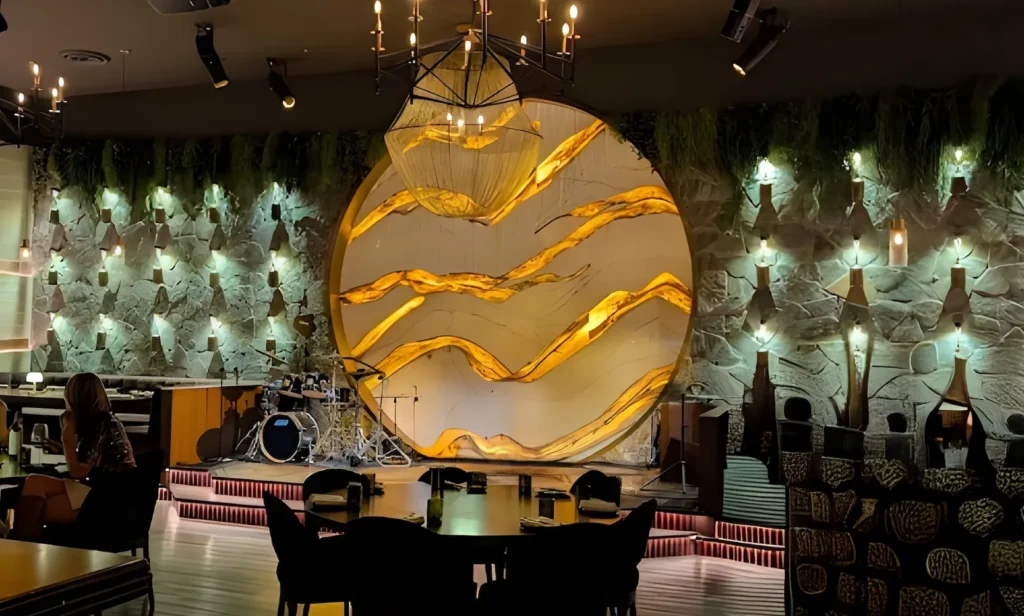
Why Linear Lighting Has Become the Defining Design Trend
Walk into any thoughtfully designed luxury home built or renovated in the last few years and you’ll likely notice the same thing: long, continuous lines of light tracing ceilings, floors, walls, and architectural details. That’s not a coincidence. Linear lighting has become the defining language of contemporary design because it accomplishes what no traditional fixture can.
The Shift from Point Sources to Continuous Light
For most of lighting’s history, fixtures were “point sources” — pendants, chandeliers, recessed cans, table lamps. Each created a single circle of light in a single location. Linear lighting fundamentally changes the equation by producing continuous, even illumination along a line rather than at a single point. This shift transforms how spaces feel:
- Continuous illumination eliminates harsh shadows and visual hot spots
- Even light distribution creates a calmer, more comfortable visual environment
- Linear forms align beautifully with the architectural lines of modern homes
- Light becomes a design element, not just a utility
- Spaces feel larger, cleaner, and more intentional
This is why architects and interior designers increasingly specify linear lighting as the primary illumination strategy in luxury residences — with point sources used selectively for accent, decoration, and visual punctuation.
What Makes Linear Lighting So Versatile
Linear lighting’s rise isn’t just aesthetic. It’s deeply practical. Modern linear lighting systems offer a combination of attributes that make them adaptable to almost any design challenge:
- Available in flexible and rigid formats for any geometry
- Cuttable to custom lengths to fit precise architectural dimensions
- Color temperature ranges from warm 2400K to crisp 6500K
- RGB and tunable white options for dynamic control
- Dimmable across virtually all major control protocols
- Compatible with premium smart home platforms like Lutron and Ketra
- Indoor and outdoor (IP-rated) variants for any environment
- Hidden in coves, niches, and channels for invisible light sources
This versatility means a single design vocabulary can illuminate a kitchen island, accent a stairway, define a wine cellar, frame a primary suite, and create an atmospheric outdoor entertaining space — each with seamless visual continuity throughout the home.
Linear Lighting vs. Traditional Fixtures
| Feature | Linear Lighting | Traditional Fixtures |
| Light distribution | Continuous, even | Point-source, uneven |
| Architectural integration | Seamless, often hidden | Visible, mounted |
| Customization | Cut to length, RGB, tunable | Fixed dimensions |
| Energy efficiency | Very high (LED) | Variable |
| Lifespan | 50,000+ hours | Often shorter |
| Aesthetic impact | Defines the space | Lights the space |
| Smart integration | Native to modern systems | Often retrofit-only |
The Technology Driving the Linear Lighting Revolution
The reason linear lighting has exploded in luxury home adoption isn’t just creative — it’s technological. Several breakthroughs in LED engineering, color science, and digital controls have converged to make today’s linear lighting fundamentally better than what was possible even five years ago.
Advances in LED Engineering
Modern LED technology has progressed dramatically in the areas that matter most for residential applications:
- Color rendering index (CRI) above 95 — colors look natural, food looks appetizing, art looks accurate
- Tunable white technology — color temperature shifts from warm morning hues to cool daylight
- Higher lumen output per foot — single linear runs can illuminate entire spaces
- Lower heat generation — safer in coves, cabinetry, and tight architectural details
- Longer operational life — 50,000+ hours of premium performance
- Improved dimming smoothness — no flicker, even at 1% output
These advances mean a properly designed linear lighting installation today rivals or exceeds the visual quality of natural daylight while consuming a fraction of the energy.
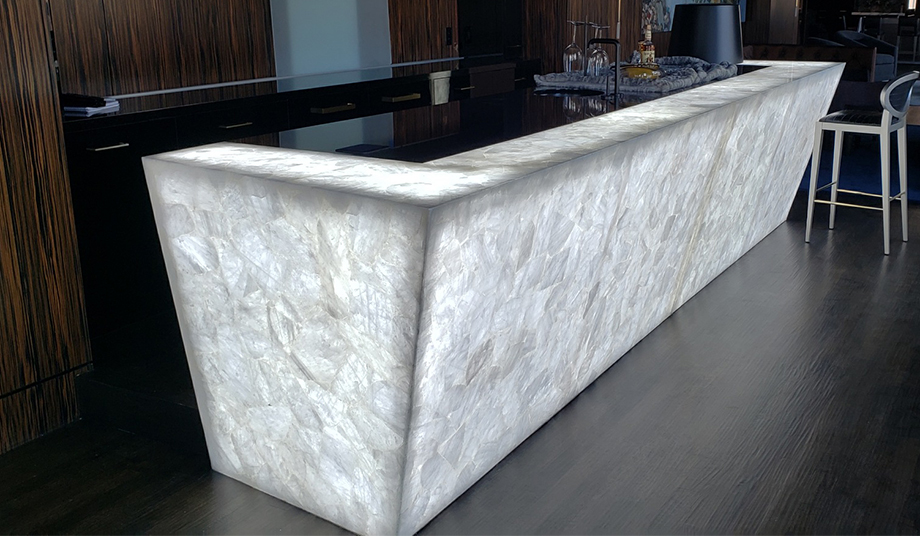
Smart Controls and Whole-Home Integration
The greatest leap forward in linear lighting hasn’t been the LEDs themselves — it’s the controls. Modern luxury homes integrate linear lighting with sophisticated platforms that bring it to life dynamically. According to research published by the U.S. Department of Energy, advanced lighting controls combined with high-efficiency LEDs can reduce residential lighting energy use by more than 50% while substantially improving lighting quality and occupant well-being.
Premium control platforms enable:
- Automated scenes that adjust by time of day
- Circadian-rhythm tuning that supports natural sleep cycles
- Voice and app control across the entire home
- Integration with motorized shades for layered light management
- Astronomical timers that follow sunrise and sunset
- Geofencing that adapts lighting based on who’s home
- Coordination with audio, climate, and security systems
For homeowners exploring how linear lighting fits into broader smart home design, our automated home lighting solutions integrate linear fixtures with the most trusted control platforms in the industry — including Lutron and Ketra — to deliver the kind of effortless luxury experience today’s homeowners expect.
Health, Wellness, and Circadian Lighting
One of the most exciting developments in linear lighting is the shift toward human-centric illumination. Research increasingly shows that the color, intensity, and timing of light have measurable effects on sleep quality, energy levels, mood, and cognitive performance.
Modern circadian lighting systems automatically:
- Deliver cool, energizing light during morning hours
- Transition through balanced daylight tones during the day
- Shift to warmer, calming hues in the evening
- Reduce blue light exposure in the hours before sleep
- Coordinate with natural sunlight through window-mounted sensors
For families with young children, professionals working from home, or anyone interested in optimizing wellness through their environment, circadian linear lighting represents one of the most impactful upgrades available in modern home design.
Linear Lighting Applications Transforming Today’s Luxury Homes
The beauty of linear lighting is that it fits virtually anywhere — and the right application transforms how a space functions and feels.
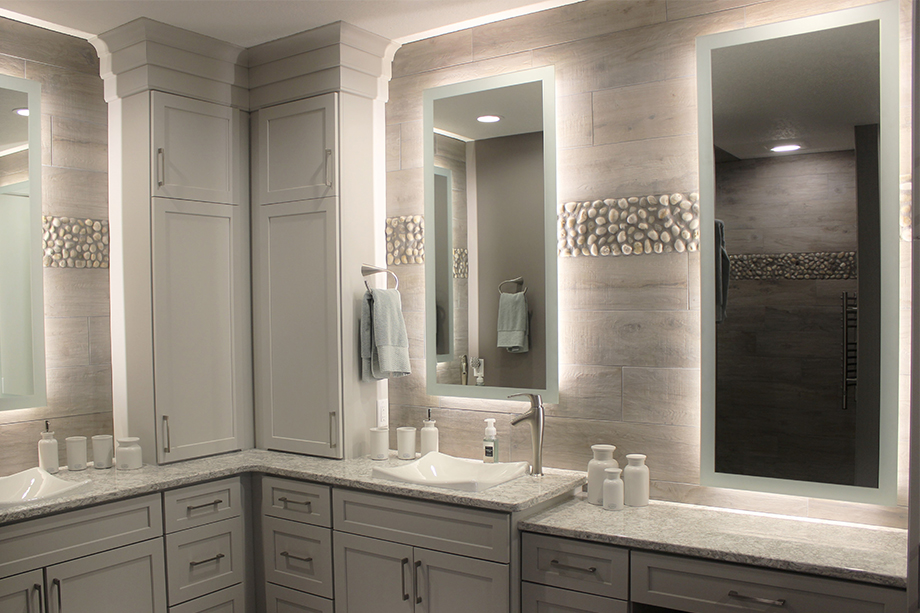
Kitchens and Culinary Spaces
The kitchen has become the heart of the modern luxury home, and linear lighting is at the center of how it performs and impresses:
- Under-cabinet linear lighting for shadow-free task illumination
- Toe-kick lighting that creates a floating cabinetry effect
- Open-shelf lighting that turns displayed glassware and ceramics into art
- Pantry lighting that activates automatically on door open
- Range hood integration for ambient cooking illumination
- Island perimeter lighting for layered evening atmosphere
A well-lit luxury kitchen layers three to five distinct linear lighting zones — each individually controlled — to support cooking, entertaining, and quiet evening moments with equal grace.
Living Spaces and Architectural Features
In primary living areas, linear lighting becomes a quiet but powerful design instrument:
- Cove lighting that washes ceilings with warm ambient illumination
- Wall-wash linear fixtures that highlight art collections
- Tray ceiling perimeter lighting for visual depth
- Fireplace surround lighting that transforms the focal point
- Bookshelf and built-in lighting for warmth and scale
- Window-frame lighting that mirrors natural daylight
The effect of well-designed cove and accent linear lighting is profound — rooms feel more spacious, more refined, and more emotionally resonant without the visual clutter of traditional fixtures.
Primary Suites and Bathrooms
Linear lighting is uniquely suited to bedrooms, dressing areas, and luxury bathrooms because of its ability to deliver flattering, controllable illumination:
- Vanity-flanking linear strips for shadow-free grooming light
- Mirror-integrated lighting for premium reflective surfaces
- Shower and steam-room IP-rated linear fixtures
- Closet rod lighting that activates on door open
- Bedside reading lights that don’t disturb a partner
- Floor-level pathway lighting for nighttime navigation
The result is a primary suite that supports every part of a daily rhythm — from energizing morning routines to peaceful nighttime wind-down — with light that feels designed for the people who actually live there.
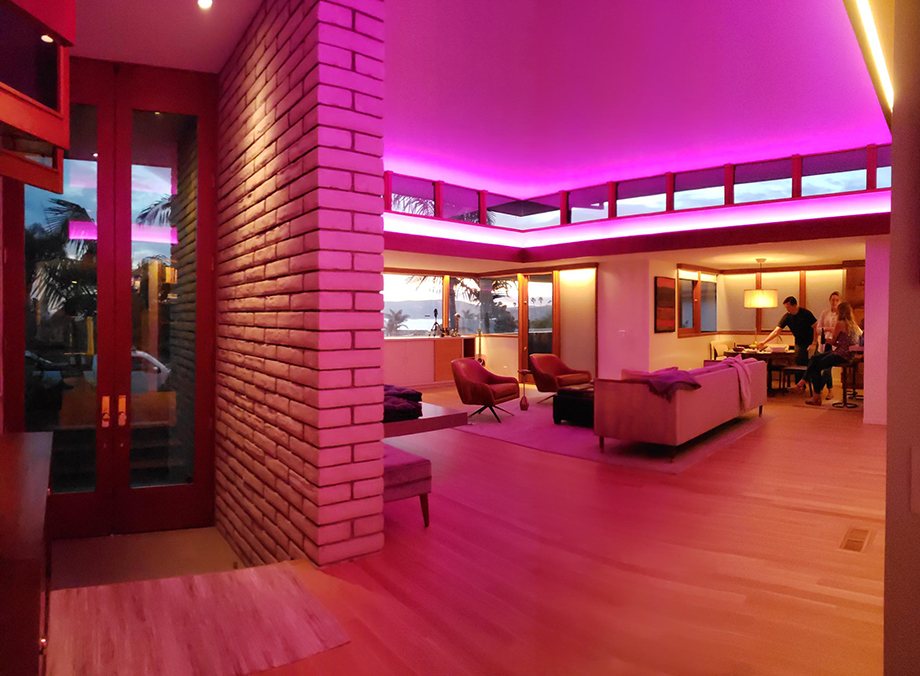
Outdoor and Architectural Lighting
Outside the home, linear lighting plays an equally transformative role:
- Soffit-integrated lighting that grazes textured stone and stucco
- Pool perimeter and water feature lighting
- Step and pathway illumination that enhances safety and beauty
- Outdoor kitchen task and ambient lighting
- Pergola and covered patio integration
- Landscape and tree-uplighting fixtures
Outdoor linear lighting in particular has surged in popularity across Austin’s hill country homes, where the line between indoor and outdoor living disappears and lighting becomes the bridge between the two.
Linear Lighting Applications by Space
| Space | Primary Applications | Key Considerations |
| Kitchen | Under-cabinet, toe-kick, island, pantry | Task quality, color rendering |
| Living areas | Cove, art wash, tray ceilings | Dimming smoothness, ambient feel |
| Primary suite | Vanity, mirror, closet, bedside | Color tunability, glare control |
| Bathrooms | Mirror, shower, niche, floor | Moisture rating, accurate color |
| Outdoor | Soffit, step, pool, landscape | IP rating, weather durability |
| Stairs/halls | Step, handrail, baseboard | Pathway safety, mood control |
Sustainability and Energy Efficiency: The Quiet Revolution
Linear LED lighting isn’t just beautiful — it’s one of the most impactful sustainability upgrades a homeowner can make. The shift from incandescent and halogen sources to high-efficiency LED linear fixtures has fundamentally changed the energy footprint of residential lighting.
Energy and Cost Advantages
Compared to traditional lighting, linear LED systems typically deliver:
- 75–85% less energy consumption for the same light output
- Operational lifespans of 50,000 hours or more
- Significantly reduced cooling load (less heat generated)
- Lower replacement and maintenance costs over the home’s life
- Eligibility for utility rebate programs in many regions
- Reduced bulb waste compared to short-life alternatives
Across an entire luxury home with hundreds of linear feet of lighting, these advantages translate into thousands of dollars in lifetime savings — and a substantially smaller environmental footprint.
The Aesthetic-Sustainability Sweet Spot
What makes modern linear lighting unique is that the most beautiful option is also the most sustainable option. The ENERGY STAR program highlights how LED-based linear lighting consistently outperforms older technologies in efficiency without sacrificing — and often improving — light quality. There’s no design trade-off. Choosing linear lighting for aesthetic reasons automatically delivers environmental and financial benefits as a bonus.
This convergence of beauty, performance, and responsibility is one of the deepest reasons linear lighting represents the future of how luxury homes will be illuminated for the next generation.
What to Consider When Designing with Linear Lighting
Linear lighting opens incredible creative possibilities, but realizing its full potential requires thoughtful design from the outset. The most beautiful installations don’t happen by accident — they’re planned with intention.
Plan Lighting at the Architectural Stage
The single most important advice for linear lighting is to plan early. The most stunning installations are integrated into the architecture itself — recessed into ceilings, hidden in cove details, built into millwork, and concealed within trim profiles. Adding linear lighting after construction is possible but rarely produces the seamless, “no-source-visible” effect that defines premium installations.
Best practices include:
- Engaging a lighting designer or integrator alongside the architect
- Creating a layered lighting plan room-by-room
- Specifying mounting channels, drivers, and concealment details on construction drawings
- Coordinating with millwork and interior teams from the beginning
- Designing for control zones, not just fixture locations
Match the Light to the Application
Different rooms require different lighting characteristics. Selecting the right product for each application is critical:
- High-CRI fixtures for kitchens, bathrooms, and art spaces
- Tunable white for spaces used across many activities
- RGB or RGBW for entertainment, kids’ spaces, and outdoor effects
- IP65+ for shower, sauna, outdoor, and pool environments
- Higher-output options for large open spaces
- Dimmable-to-1% drivers for evening ambient applications
A great installer or smart home integrator will guide product selection so each fixture matches the demands of the space — both technically and aesthetically.
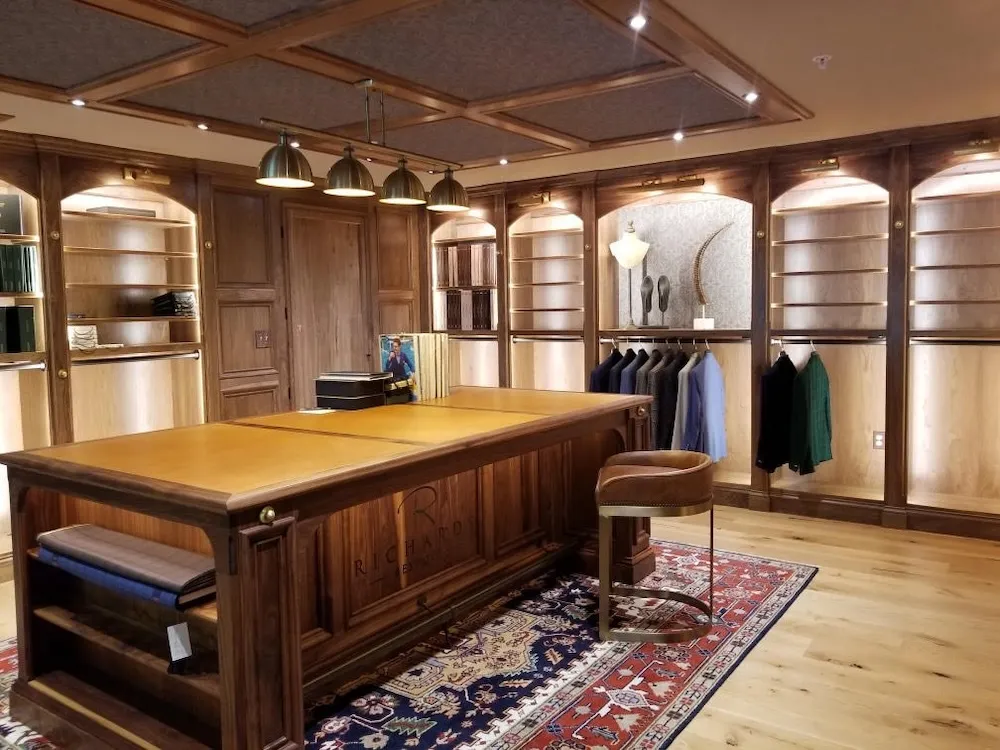
Choose the Right Control Strategy
Linear lighting reaches its full potential only when paired with thoughtful controls. The right control strategy varies by home, but typically includes:
- A central platform like Lutron or Ketra to coordinate the home
- Wireless or wired keypads at room entries
- Voice control through a preferred voice assistant
- Mobile app access for remote management
- Automated scenes for morning, evening, entertaining, and sleep
- Astronomical and circadian programming where appropriate
For homeowners across Austin and surrounding communities, Homeva specializes in integrating linear lighting with the same premium control platforms — Lutron and Ketra — that drive the most sophisticated luxury homes in the country.
Frequently Asked Questions About Linear Lighting
1. What is linear lighting and how is it different from traditional lighting? Linear lighting refers to elongated, continuous fixtures that produce an even line of illumination rather than a single point of light. Unlike traditional pendants, chandeliers, or recessed cans that light a specific spot, linear lighting can run for several feet — or hundreds of feet — providing continuous, even, glare-free light. It can be hidden in coves, integrated into millwork, or featured as an architectural element.
2. Is linear lighting suitable for traditional or transitional homes? Absolutely. While linear lighting is often associated with modern aesthetics, it works beautifully in traditional and transitional homes when designed thoughtfully. Hidden cove lighting, under-cabinet lighting, and discreet stairway illumination enhance traditional architecture without competing with classical fixtures. The key is integration — letting the linear lighting support the existing aesthetic rather than impose a new one.
3. How much does professional linear lighting design cost? Costs vary significantly based on home size, scope, control system, and product selection. Whole-home linear lighting integrations in luxury residences typically range from a portion of a percentage of construction value to several percent depending on complexity. Homeva provides detailed proposals during the design phase so homeowners can plan with full clarity.
4. Can linear lighting be added to an existing home, or only during construction? Linear lighting can absolutely be retrofitted into existing homes, especially in areas like under-cabinet locations, closets, art walls, and accessible coves. The best results come from new construction or major renovation when the lighting can be integrated into the architecture, but skilled installers can achieve beautiful results in existing homes by working within the available concealment opportunities.
5. How long does linear LED lighting last? Quality linear LED fixtures typically last 50,000 hours or more — roughly 17 years of operation at 8 hours per day. Premium fixtures with proper drivers and thermal management often exceed even those figures. This is dramatically longer than incandescent or halogen alternatives and significantly reduces both replacement costs and maintenance.
6. Does linear lighting work with smart home systems like Lutron and Ketra? Yes. Modern linear lighting is designed for full integration with premium smart home platforms including Lutron and Ketra. These systems provide precise dimming, scene control, circadian programming, voice and app control, and coordination with shades and other home systems. Integration with these platforms is part of what makes linear lighting feel like luxury rather than just lighting.
7. Will linear lighting save money on my energy bills? Yes, typically dramatically. LED-based linear lighting uses 75–85% less energy than incandescent or halogen alternatives while lasting many times longer. When combined with smart controls that automatically dim or turn off lights when not needed, the energy savings across a luxury home can be substantial — often hundreds of dollars per year.
8. Where should I start if I want to add linear lighting to my home? The best starting point is a conversation with a qualified lighting designer or smart home integrator. They can assess your space, understand your lifestyle and aesthetic goals, and develop a plan that integrates linear lighting with your overall home design. For Austin homeowners, Homeva offers complimentary in-home consultations to begin that process — no commitment, just a clear roadmap for what’s possible.
Step Into the Future of Lighting with Homeva
Linear lighting isn’t a passing trend — it’s the foundation of how the next generation of luxury homes will be designed, built, and lived in. The combination of unmatched aesthetic versatility, exceptional energy efficiency, seamless smart home integration, and proven wellness benefits makes it the clear direction of high-end residential illumination. Homes designed with linear lighting today are homes that will feel current, beautiful, and effortless for decades to come.
At Homeva, we specialize in bringing this future to life for discerning homeowners across Austin, Westlake, Tarrytown, Barton Creek, Lakeway, Bee Cave, and the broader Texas Hill Country. Our team designs and installs linear lighting integrated with premium smart home platforms — Lutron, Ketra, and the most trusted brands in luxury automation — to create homes that respond intuitively to the people who live in them. From new construction projects to thoughtful renovations, every system we deliver is built to be as elegant, reliable, and intuitive as the homes themselves.
If you’re planning a new home, considering a renovation, or simply curious about how linear lighting could transform the way your current home feels, this is the right moment to begin the conversation. The earlier we’re involved, the more seamlessly linear lighting can be integrated into your home’s architecture and lifestyle. Schedule a free consultation with Homeva today and discover what the future of lighting looks like in your home — designed around your taste, your routines, and the way you want to live every day.