
Smart mirrors are starting to change the way a bathroom feels before they change the way it looks. At first, the upgrade can seem simple. A cleaner reflection. Better lighting. A built-in display. Less visual clutter around the vanity. Then the routine begins to shift. Morning grooming feels more precise. Evening care feels calmer. Information appears where it is actually useful. The bathroom stops being only a place to get ready and starts becoming part of the home’s wellness rhythm.
That is why smart mirrors belong naturally inside modern luxury bathroom design. They bring technology into one of the most personal rooms in the home, but they do not need to make the space feel technical. The best versions feel quiet, intentional, and almost invisible until they are needed.
At Homeva, smart home technology is not treated as a collection of devices. It is designed around daily comfort, control, reliability, and the way people actually live. Homeva’s smart mirror service focuses on reliable products, seamless setup, and integration into the home environment rather than one-off gadgets.
Why Smart Mirrors Fit Modern Luxury Bathrooms
A luxury bathroom does not become better just because it has more technology. It becomes better when the technology supports comfort, privacy, grooming, lighting, and daily ease without disrupting the design.
That is where smart mirrors have a strong place. A mirror is already part of the routine. It is where people shave, apply skincare, style hair, check details, prepare for work, wind down at night, and move through small moments that shape the day. Adding intelligence to that surface can feel natural when the design is handled with restraint.
A well-planned smart mirror can support lighting, audio, anti-fog comfort, time, weather, calendar visibility, and wellness-related information without asking the homeowner to add another screen to the room. It gives the bathroom more function while keeping the visual field clean.
This matters in high-end homes because the bathroom is no longer treated as a purely practical space. It is part of the larger living experience. The finishes matter. The lighting matters. The transition from bedroom to bathroom matters. The technology should respect that same level of detail.
Bathroom Smart Mirrors Should Feel Integrated, Not Added On
The difference between a good smart bathroom and a cluttered one usually comes down to integration. A smart mirror should not feel like a tablet was placed behind glass. It should feel like the mirror, lighting, controls, and surrounding room were designed to belong together.
This starts with placement. The mirror has to work with the vanity, sink position, wall finish, light sources, and natural sightlines. It also has to make sense for how the bathroom is used. A primary suite may need a different experience than a guest bath, powder room, or dressing area.
Bathroom smart mirrors also need to account for moisture, visibility, wiring, connectivity, reflection quality, and the way the interface appears when the display is on or off. In luxury bathroom technology, the inactive state matters just as much as the active one. When the mirror is not being used as a display, it should still look calm, clean, and appropriate for the room.
That is one of the reasons professional planning matters. The mirror should support the design instead of competing with it.
How Smart Mirrors Improve Personal Grooming
Personal grooming depends on small details. Light temperature can change how skin tone appears. Shadows can make shaving or makeup less precise. Steam can interrupt visibility. Poor mirror placement can make a beautiful bathroom frustrating to use.
Smart mirrors can improve that experience by bringing more control into the routine. Better illumination, anti-fog functionality, dimming, and integrated display options can make the grooming area feel more responsive. The goal is not to make the bathroom feel busy. The goal is to remove friction.
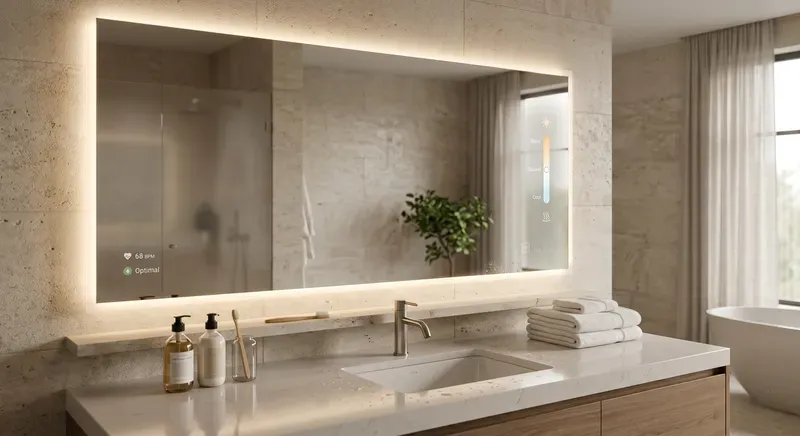
Morning routines often need clarity. Evening routines usually need softness. A smart mirror can help support both if it is planned with the right lighting and control logic. Bright, clean visibility may work well at the beginning of the day. A warmer, dimmer mirror scene may feel better before bed.
This is where smart mirrors connect with the broader idea of home automation. They are not just reflective surfaces. They can become part of scenes, routines, and room behavior. The bathroom can shift with the homeowner instead of staying fixed in one mode all day.
Health and Wellness Tracking Without Turning the Bathroom Into a Clinic
The future of smart mirrors is closely tied to health and wellness tracking, but this idea needs to be handled carefully. A bathroom mirror should not pretend to replace medical care. It should not make the room feel clinical. It should not turn everyday grooming into a stressful stream of data.
The stronger direction is quieter. Researchers have explored how mirrors can support passive collection of wellness-related metrics, such as body temperature, heart rate, and visible skin changes, while people move through normal routines.
That idea points to a future where bathroom technology becomes more observant, not more intrusive. Instead of forcing people to open another app or wear another device, the mirror may eventually help surface patterns that are already connected to daily habits.
For luxury homes, the value is not only the data. The value is how gently that data is introduced. Health and wellness tracking should feel optional, private, and useful. A smart mirror should support awareness without making the bathroom feel like a dashboard.
Why Wellness Features Need a Calm Design Philosophy
Not every feature belongs in every bathroom. A mirror that tries to do too much can make the room feel less peaceful. This is especially true when wellness technology is involved.
Good design starts by asking what the homeowner actually wants from the space. Some people may want a mirror that supports grooming, lighting, and simple display information. Others may be interested in future-facing health and wellness tracking features. Some may care most about anti-fog performance, discreet audio, or integration with lighting scenes.
The best smart mirrors are chosen around the routine, not around a feature checklist. A long list of capabilities means very little if the mirror feels distracting, difficult to use, or visually heavy.
At Homeva, this aligns with a more thoughtful approach to smart home design. The goal is not to make every room feel more digital. The goal is to make the home feel more responsive, more comfortable, and easier to live in. Our smart home solutions goal is to adapt to daily routine, which is especially important in private spaces like bathrooms.
Smart Mirrors as Part of a Larger Luxury Bathroom System
A smart mirror works best when it is not treated as an isolated upgrade. It should connect with the lighting plan, shade control where relevant, audio, room scenes, and the larger control experience of the home.
Imagine a morning scene where the bathroom lights rise gradually, the mirror clears, the room feels bright but not harsh, and the homeowner can see basic information without reaching for a phone. Later, an evening scene may soften the lighting, reduce display intensity, and make the bathroom feel more relaxed.
That kind of experience depends on coordination. The mirror, lighting, and controls need to support the same mood. If each device behaves separately, the room can start to feel fragmented. If they are integrated correctly, the technology becomes quieter.
This is where luxury bathroom technology becomes more than a product category. It becomes a design language. The home feels composed because each system understands its role.
Choosing Smart Mirrors for Real Bathroom Use
A smart mirror should be chosen with practical questions in mind. The bathroom environment is different from a living room, office, or media space. Steam, cleaning routines, lighting conditions, privacy expectations, and daily repetition all matter.
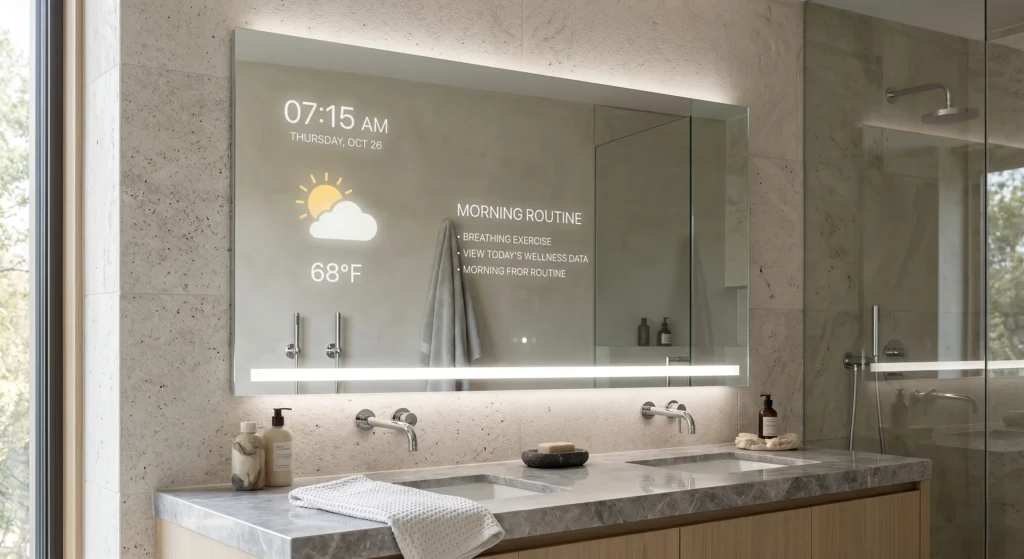
Before choosing a mirror, it helps to consider how the vanity is used. Is the bathroom shared? Does one person use it early while another is still asleep? Is grooming detailed and light-sensitive? Is the goal a spa-like feeling, a highly functional morning routine, or a cleaner design with fewer visible devices?
The best answer may not be the most feature-heavy mirror. It may be the one that fits the room, supports the right scenes, looks refined when inactive, and remains easy to use every day.
A smart bathroom should never feel like a showroom trick. It should feel like the home understands the routine better.
Where Smart Mirrors Are Going Next
Smart mirror technology is moving toward more personalization, more wellness awareness, and more seamless interaction. Market analysis has pointed to growing interest in mirrors with AI, augmented reality, posture tracking, facial recognition, fitness feedback, and wellness-related use cases.
That does not mean every luxury bathroom needs every new feature. It means homeowners will have more choices. Some smart mirrors may lean toward grooming and lighting. Others may support fitness, wellness, beauty routines, or personal data visibility. The important question will be which features actually improve the space.
For Homeva-style luxury automation, the future should still feel calm. The mirror may become more capable, but the experience should remain simple. The homeowner should not have to think about the technology. It should appear when useful, disappear when not needed, and belong naturally to the room.
How Homeva Approaches Smart Mirrors in Luxury Homes
Homeva’s role is not just to install a smart mirror. It is to help the mirror make sense within the home. That means thinking through design, reliability, control, daily use, and how the mirror connects with the rest of the smart home environment.
A bathroom mirror is personal. It is used up close. It is seen every day. It affects how the room feels in the morning and how calm it feels at night. That makes the planning process important.
Homeva works in the space where smart home technology and luxury living meet. Smart mirrors can be part of that experience when they are selected carefully, installed cleanly, and integrated with the broader rhythm of the home. The result should not feel futuristic in a loud way. It should feel refined, useful, and natural.
Smart Mirrors Should Make the Bathroom Feel More Human
The most interesting thing about smart mirrors is not that they add technology to the bathroom. It is that they can make the bathroom feel more responsive to the person using it.
A good mirror supports visibility. A better mirror supports routine. A truly well-integrated smart mirror supports comfort, grooming, privacy, atmosphere, and wellness awareness without making the space feel complicated.
That is the direction luxury bathroom technology should take. Not more screens for the sake of screens. Not more data for the sake of data. Smart mirrors should make daily life feel smoother, calmer, and more intentional.
For homeowners exploring a more refined bathroom experience, Homeva can help plan smart mirrors as part of a larger smart home environment built around design, comfort, and everyday ease.
FAQ
What are smart mirrors?
Smart mirrors combine a reflective surface with integrated technology such as lighting, display features, anti-fog functions, audio, or smart home controls.
Are smart mirrors useful in luxury bathrooms?
Yes. They can improve grooming, lighting control, comfort, and visual simplicity when they are planned around the room’s design.
Can smart mirrors support health and wellness tracking?
Some emerging systems may support wellness-related tracking, but features vary. They should not replace medical advice or professional care.
Do bathroom smart mirrors need professional installation?
Professional installation is usually best for clean wiring, reliable connectivity, proper placement, and integration with lighting or control systems.
How does Homeva work with smart mirrors?
Homeva helps integrate smart mirrors into the broader smart home experience, focusing on reliability, design fit, and daily ease.