
A connected home should feel quiet in the best possible way. Lights respond without hesitation. Shades move when privacy or sunlight calls for it. Audio fills the right rooms without making anyone think about the system. Climate control supports the space. Doors, sensors, scenes, and control interfaces stay in the background, helping the home feel calm, polished, and easy to live in.
That kind of experience does not depend on installation alone. A smart home continues to change after the first day. Devices update. Networks shift. Families use rooms differently. New technology is added. Small inconsistencies can slowly affect the feeling of the whole home before anyone can name exactly what changed.
Proactive smart home monitoring matters because it protects the experience before comfort is interrupted. Reactive repair waits for the homeowner to notice a problem. Proactive care watches the system more thoughtfully, so small signals can be addressed before they turn into daily frustration.
At Homeva, we see service and monitoring as part of the design itself. A smart home should not feel impressive only on the day it is installed. It should keep feeling responsive, elegant, and natural as the home continues to evolve.
Why Proactive Smart Home Monitoring Matters Before Repairs Feel Urgent
Reactive repairs usually begin after something has already disturbed the day. A lighting scene does not activate before dinner. A motorized shade stops responding when privacy matters. A speaker drops from a room during a gathering. A control screen feels slow just when the homeowner expects everything to be simple.
Those moments may look small from the outside, but inside the home they feel personal. Smart home technology becomes part of a routine. Once the home has been designed to respond gracefully, even a minor interruption can make the space feel less refined.
That is why proactive smart home monitoring is so important. The value is not only technical. It is experiential. A monitored system can reveal performance patterns, communication issues, device instability, or update needs before the homeowner has to manage the problem. Instead of waiting for comfort to break, the system has a quieter path for care.
Reactive repairs still have a place. Some issues need direct attention after they appear. But a support model built only around failure makes the homeowner responsible for noticing every sign first. Proactive smart home monitoring shifts that responsibility away from daily life and back into a thoughtful support structure.
What Proactive Smart Home Monitoring Actually Supports
Proactive smart home monitoring is not about making the home feel more technical. It is about keeping the technology less visible, less fragile, and more dependable.
In practical terms, it can support system health, device communication, network behaviour, update awareness, connected equipment status, and patterns that suggest a room or system may not be performing as smoothly as intended. The goal is not to flood the homeowner with alerts. The goal is to protect the calm that the smart home was designed to create.
A well-designed system should not require the homeowner to become the system manager. Lighting should feel natural. Audio should feel effortless. Shades should move with the rhythm of the day. Controls should stay consistent. When something needs attention, the process should feel clear, calm, and handled with care.
That is where a smart home service plan becomes more than technical support. It becomes a long-term layer of reliability for the living experience.
Smart Home Maintenance Protects the Feeling of the Home
Smart home maintenance is often described in technical language: updates, checks, troubleshooting, configuration, and network review. All of that matters. The deeper purpose is more human. Maintenance protects the way the home feels.
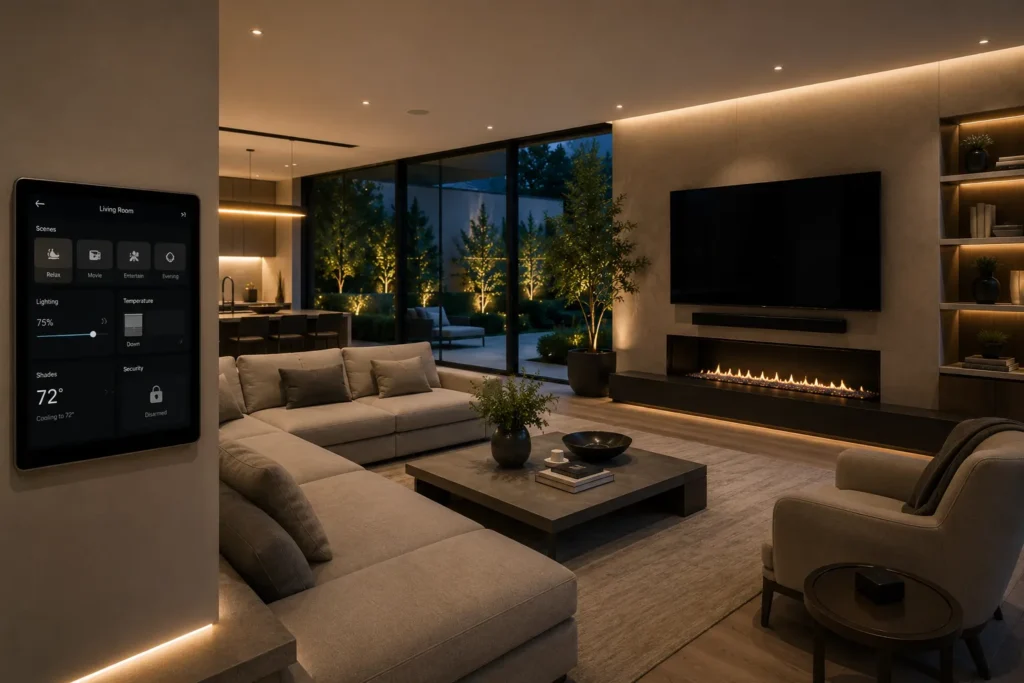
A smart home works best when it reduces decisions. The homeowner does not think about which lights to adjust or which shade to close. The room simply responds in a way that fits the moment. That ease is part of the luxury.
When maintenance is ignored, that ease can fade. A scene may become inconsistent. A control interface may feel crowded. A room may no longer match how the family actually uses it. A device may fall behind after a network change. None of these issues has to be dramatic to affect comfort.
Proactive smart home monitoring helps preserve the original design intent. It keeps the system aligned with the architecture, the routines, and the quiet expectations that make connected living feel natural.
The Home Keeps Changing After Installation
A smart home does not stay fixed after installation. A guest room may become a media room. A formal space may become a daily work area. Children grow. Outdoor living becomes more important. Furniture moves. Landscaping changes light and privacy. New devices enter the home.
Those shifts affect automation. A lighting scene that once felt perfect may need refinement. Motorized shades may need a new schedule. Audio zones may need to match new entertaining patterns. A control interface may need to be simplified as the system expands.
Reactive support usually responds to what has gone wrong. Proactive smart home monitoring can also reveal where the system needs to evolve. That distinction matters. A connected home should not only keep working. It should keep fitting the people who live there.
At Homeva, that long-term fit is central to the experience. Technology should adapt around the home, not force the homeowner to adjust around technology.
Reliability Often Starts With the Network
Many smart home issues do not begin with the visible device. A shade, keypad, speaker, thermostat, camera, or control panel may seem like the problem, while the real issue sits in the network behind it.
Weak coverage, device congestion, interference, outdated settings, or a router change can affect how smoothly connected systems communicate. The homeowner may notice a light scene behaving inconsistently or audio dropping in one room, but the deeper cause may be infrastructure.
Proactive smart home monitoring helps identify those patterns earlier. Instead of treating every symptom as an isolated repair, the home is understood as a connected environment. That view makes support more precise and less disruptive.
In a refined smart home, reliability depends on what people do not see. The network, programming, devices, controls, and service plan all support the same quiet outcome: the home keeps responding beautifully.
A Smart Home Service Plan Makes Support Feel Less Random
Without a service plan, support can feel occasional. Something stops working. Someone investigates. The immediate issue is fixed. Then the home continues until the next disruption.
That approach can work for simple technology, but it feels less appropriate in a fully integrated home. Lighting, shades, audio, climate, networking, access, security, and control all depend on each other. A change in one layer can affect another.
A smart home service plan creates continuity. It gives the system a regular rhythm for review, refinement, and support. It also makes it easier to understand what has changed, what is performing well, and what may need attention before it becomes noticeable.
Proactive smart home monitoring strengthens that continuity. It helps the service plan feel less reactive and more intentional. For the homeowner, the result is not only smoother technology. It is a home that feels cared for.
Proactive Support Preserves Design Intent
Smart home systems are often designed around feeling. A soft morning transition. A quiet evening scene. A warm dining setting. A private bedroom routine. A media room that activates without a list of steps. A clean arrival experience when someone comes home.
Those details are not extras. They are part of the design.
When systems drift, the home may still function, but the refinement starts to fade. Lights may turn on, but not at the right level. Shades may move, but not at the right moment. Audio may play, but not with the same ease. The technology remains, yet the experience becomes less graceful.
Proactive smart home monitoring helps protect that design intent over time. It keeps the system from becoming a collection of features that slowly lose connection to daily life. It supports the reason the technology was installed in the first place: to make the home feel easier, calmer, and more complete.
The Best Smart Home Support Is Often Invisible
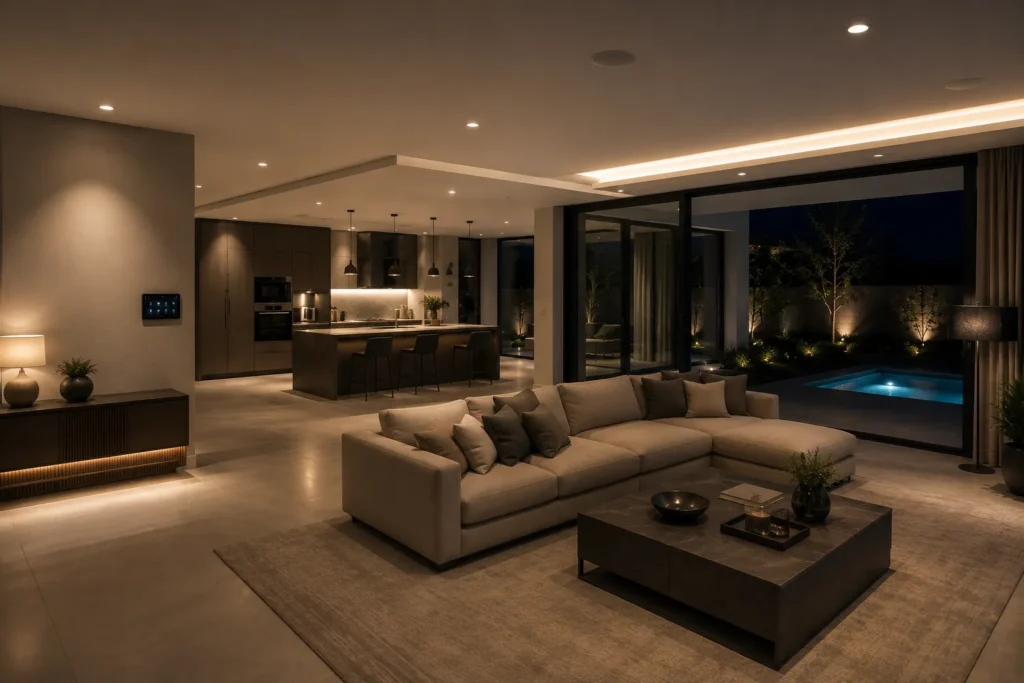
The most valuable support is not always the most visible. Sometimes it is a small adjustment. Sometimes it is a device check before performance slips. Sometimes it is network review after a change. Sometimes it is a system health check after an update. Sometimes it is simplifying controls that have become too layered over time.
Good support should not make itself the centre of the home. It should make the home feel more stable, more intuitive, and more dependable.
In that sense, Proactive smart home monitoring follows the same philosophy as premium smart home design. It works best when it supports life quietly. The homeowner should not have to think about why the home feels reliable. They should simply feel that it does.
When Reactive Repairs Still Matter
Proactive care does not remove the need for repair. Hardware can fail. Power events can happen. Internet service can be interrupted. Devices can stop responding. Unexpected changes can still require hands-on attention.
The difference is that reactive repair should not be the only strategy. A stronger service model uses both. Proactive smart home monitoring helps reduce preventable disruption. Reactive support handles the moments that still need direct response.
That combination creates a calmer long-term experience. The homeowner has fewer surprises, clearer support, and more confidence in the system. The home has someone watching the details that are easy to overlook until comfort is affected.
Long-Term Reliability Should Be Planned From the Beginning
Smart home planning should include one important question: how will this system stay reliable over time?
That question changes the design conversation. It encourages cleaner infrastructure, better documentation, smarter product selection, stronger network planning, and control systems that can be supported as the home evolves. It also helps the homeowner understand that smart home technology is not a one-time feature. It is part of the living environment.
Proactive smart home monitoring gives that environment a path for ongoing care. It keeps the system from becoming a mystery after installation. It gives the homeowner a clearer way to support, refine, and preserve the experience over time.
At Homeva, that is part of responsible design. A beautiful smart home should feel impressive on day one, but it should also feel natural years later.
A Better Smart Home Keeps Working Quietly
The real difference between reactive repairs and Proactive smart home monitoring is not only timing. It is mindset.
Reactive repair asks what stopped working. Proactive care asks what needs attention before comfort is affected. That shift matters because the best smart home does not ask the homeowner to manage every small issue. It simply keeps supporting daily life.
A connected home should make living feel easier, calmer, and more controlled. It should not feel fragile after installation. It should not require the homeowner to chase small problems or wonder why the experience feels less smooth than it once did.
With the right smart home service plan, smart home maintenance becomes part of the design, not an afterthought. Homeva builds connected living around that quiet standard: technology that responds beautifully because the system behind it is cared for with the same intention used to design it.
FAQ
What is proactive smart home monitoring?
It is ongoing system oversight that helps identify issues before they interrupt daily comfort or connected home performance.
Why does a smart home need maintenance?
Connected systems change through updates, network shifts, device use, and evolving routines. Maintenance helps preserve reliability.
Is proactive monitoring better than reactive repair?
It usually creates a smoother experience because small issues can be addressed before they become daily frustrations.
What does a smart home service plan support?
It can support system checks, updates, troubleshooting, network stability, refinement, and long-term smart home performance.
How does Homeva approach smart home support?
Homeva focuses on comfort, reliability, control, and keeping connected systems aligned with how the home is actually used.