
Solar shades Austin homeowners choose for sunrooms have to do more than soften bright light. In Central Texas, a sunroom can be the most inviting space in the house at 9 a.m. and one of the hardest rooms to enjoy by mid-afternoon. The same glass that makes the room beautiful can also bring heat, glare, faded fabrics, washed-out screens, and uneven comfort.
That is the real tension of a sunroom. Homeowners want the openness, the view, and the daylight. They do not want a room that feels like it only works during perfect weather or at very specific hours of the day.
High-performance solar shades solve that problem more elegantly than heavy drapery or basic blinds. They filter sunlight, reduce harsh glare, help manage solar heat gain, and preserve the feeling of connection to the outdoors. When they are motorized, hardwired, and integrated properly, they become part of how the home behaves throughout the day.
At Homeva, solar control is treated as design, infrastructure, and comfort working together. The goal is not just to cover windows. The goal is to help a sunroom feel usable, calm, and intentional during the hours when Austin sunlight is at its strongest.
Why Austin Sunrooms Need Better Solar Control
Sunrooms ask a lot from window treatments. They usually have more glass than other rooms, more direct exposure, and fewer places for sunlight to hide. A standard shade may help for a few minutes, but it often does not solve the deeper issue.
The problem is not only brightness. It is heat buildup.
Once sunlight enters a glass-heavy room, the space can warm quickly. That heat can make the room uncomfortable, increase air conditioning demand, limit how the space is used, and create a noticeable difference between the sunroom and the rest of the home.
Solar shades Austin homes use in these spaces need to be selected with performance in mind. Fabric openness, color, weave, window orientation, motorization, and control scenes all matter. The right system should reduce the uncomfortable parts of sunlight without making the room feel closed, dark, or disconnected from the view.
That balance is what makes solar shades different. They do not fight the room’s purpose. They help the room work better.
Solar Heat Gain Is Usually the Real Problem
Many homeowners first notice glare because glare is immediate. It hits a screen, a dining table, a polished floor, or someone’s eyes. But solar heat gain is often the more important issue.
In an Austin sunroom, heat can build slowly and then suddenly make the room feel unusable. By the time the space feels too hot, the sun has already been working through the glass for hours.
Solar shades help by filtering sunlight before it fully dominates the room. The level of control depends on the fabric and openness factor. A tighter weave can reduce more light and provide stronger glare control. A more open fabric can preserve more of the view while still softening exposure.
This is why solar shades Austin projects should not be handled like generic window covering orders. A west-facing sunroom, an east-facing breakfast space, and a shaded room with partial tree coverage all need different thinking. The best solution starts by watching how the sun actually moves through the space.
What Makes Solar Shades Different From Regular Shades
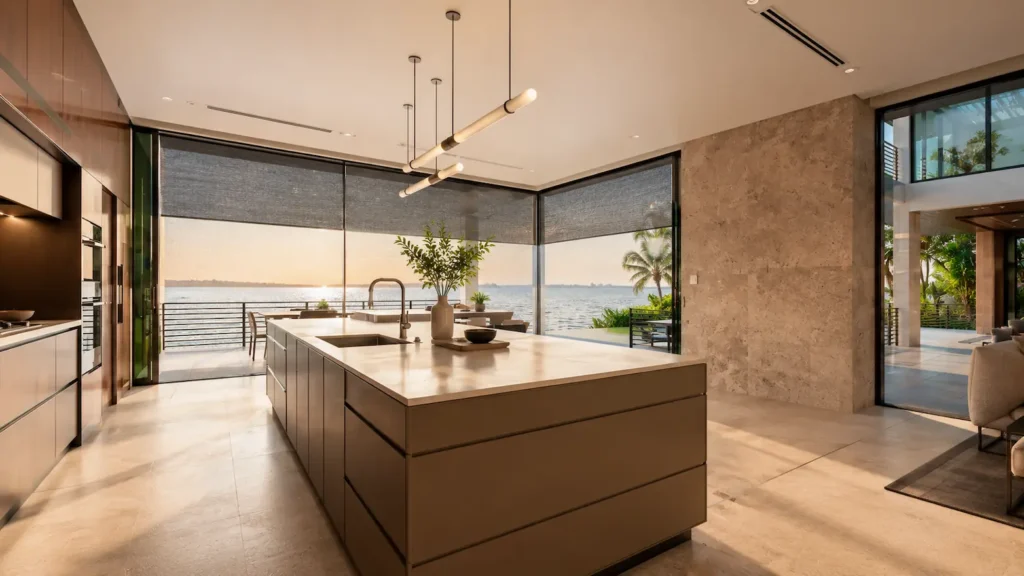
Solar shades are built around filtration, not full concealment. They are designed to reduce harsh sunlight while keeping the room visually connected to the outside. That makes them especially useful for sunrooms, where daylight and view are part of the reason the room exists.
The main performance detail is the openness factor. This refers to how open or tight the shade fabric is. A lower openness factor blocks more light and can improve daytime privacy, but it may reduce outward visibility. A higher openness factor keeps more of the view but allows more light and heat through.
There is no universal “best” fabric. The best choice depends on the room, exposure, privacy expectations, and how the homeowner wants the space to feel.
Solar Shades Austin homeowners select successfully are usually chosen through that kind of tradeoff. The question is not only which fabric looks best in a sample. The better question is what the room needs at the brightest, hottest, most difficult point of the day.
Why Motorized Solar Shades Make the Room Easier to Use
Manual shades can work in simpler rooms. Sunrooms are rarely simple.
They may have tall windows, several glass walls, furniture close to the windows, doors, transoms, or openings that are awkward to reach. Even if each shade is easy to operate on its own, adjusting all of them several times a day can become tedious.
That is where motorized solar shades change the experience.
With motorized control, shades can lower during peak heat, open when the light softens, and move into preset scenes without the homeowner managing every window individually. The room can adapt as the day changes.
This matters because shade performance depends on use. A perfectly selected shade does very little if it stays in the wrong position all day. Motorization makes the correct position easier to use, which means the system performs more consistently.
For solar shades Austin sunroom installations, motorization is not just a luxury detail. In many homes, it is what makes the shade strategy practical.
Hardwired Shades Feel Cleaner in Premium Homes
Battery-powered motorized shades can be useful in some retrofit situations, but hardwired systems often make more sense for premium sunrooms and large glass installations.
A hardwired shade system uses dedicated power, which removes the routine of charging or replacing batteries across multiple windows. That is especially valuable when shades are tall, numerous, or positioned in hard-to-reach areas.
Hardwired systems also feel more integrated. The shades behave like part of the home rather than accessories added after the room became uncomfortable. In remodels, new construction, or serious smart home upgrades, this planning can make the finished result look cleaner and operate more reliably.
Not every project needs hardwiring. The right answer depends on the home. But for solar shades Austin homeowners want to live with for years, dedicated power is worth discussing early.
The more glass the room has, the more that long-term reliability matters.
Utility Should Still Feel Beautiful
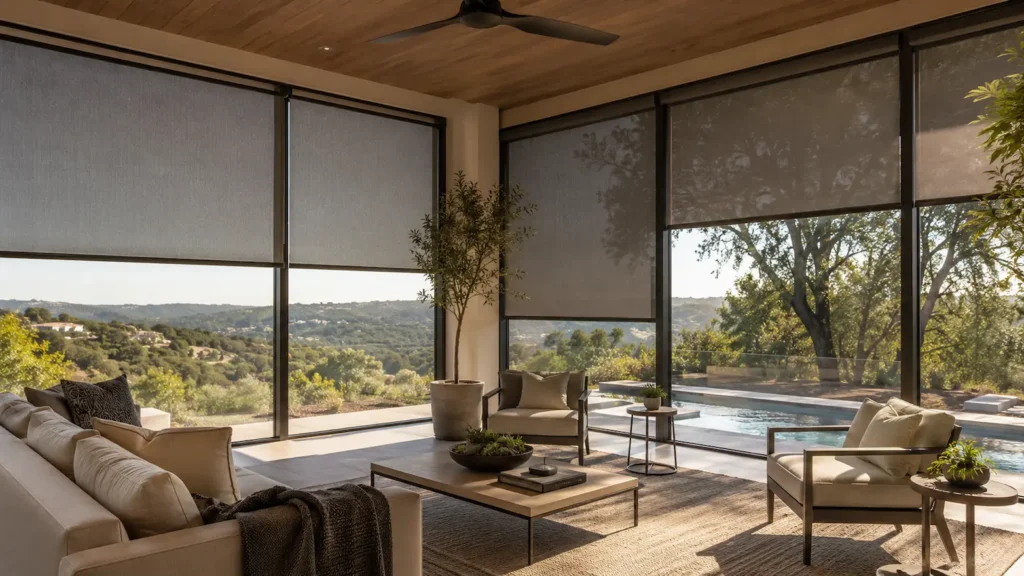
A performance shade system should not make a sunroom feel mechanical. If the installation looks bulky, mismatched, or overly technical, the room can lose some of the calm that made it attractive in the first place.
The details matter. Fabric colour, roll direction, cassette style, mounting location, hem bar, side gaps, control interface, and integration with surrounding finishes all affect the final feel.
The best solar shades do not ask for attention. They make the room easier to enjoy.
In a sunroom, that means softening the harshest parts of the day while keeping the room open, bright, and connected to the landscape. It means reducing glare without turning the space into a dark media room. It means improving comfort without making the design feel heavy.
Homeva’s approach to solar shades Austin projects is built around that balance: technology that supports the room instead of interrupting it.
Austin Sunrooms Often Need Shade Zones
One of the strongest advantages of motorized solar shades is zoning. Not every window needs the same treatment at the same time.
A south-facing wall may need protection while another side of the room stays open. A seating area may need glare control while the view near the garden remains visible. A morning scene may feel completely different from an afternoon cooling scene.
With manual shades, that kind of precision becomes a chore. With motorized control, it becomes part of how the room works.
A sunroom might have a morning mode for soft light, an afternoon mode for heat control, an evening mode for privacy, and an away mode for interior protection while the home is empty. These scenes make the room feel more responsive without requiring constant decisions.
Solar shades, used in Austin homes this way, can make a sunroom feel less like a room with window coverings and more like a space that understands the day.
Reducing Glare Without Losing the View
Glare can quietly ruin a room. It can make reading uncomfortable, turn screens into mirrors, bounce off tables, and make a bright room feel harsher than it should.
The goal is not to remove daylight. The goal is to control it.
Solar shades help because they filter the light instead of blocking it completely. The room can remain bright but softer. The view can remain present, depending on fabric choice. The experience changes from exposed to comfortable.
This is especially important for sunrooms used as casual work areas, breakfast rooms, reading spaces, or entertainment zones. A room that cannot be used comfortably during peak daylight is not really serving the home.
Solar shades Austin installations should protect the reason the room exists. The sunroom should still feel like a sunroom. It should simply stop punishing the homeowner for enjoying it.
Protecting Furniture, Flooring, and Interior Finishes
Texas sunlight does not only affect comfort. It affects materials.
Upholstery, rugs, wood tones, flooring, artwork, and fabrics can all fade or shift over time with repeated direct exposure. A sunroom is especially vulnerable because the same surfaces may sit near glass every day.
Solar shades can reduce that exposure during peak hours. They do not require the homeowner to choose between protecting the room and enjoying filtered light. With the right fabric, the space can remain visually open while gaining a layer of protection.
Automation makes this protection more consistent. A homeowner may not remember to lower shades before leaving for the day. A scheduled scene can do it reliably.
The value is not one dramatic moment. It is repetition. The system protects the room because it responds the same way, day after day.
Smart Shade Control Should Feel Quiet
Smart home technology is at its best when it reduces friction. It should not make a homeowner think about the system more. It should make the room easier to live in.
Motorized solar shades can connect with scenes, schedules, remotes, touch panels, or broader home control systems. For a sunroom, that might mean shades lower gradually as light intensifies, rise when the room cools, or coordinate with lighting as evening begins.
This creates a more natural rhythm. The homeowner does not need to stop a conversation, walk around the room, or adjust every window because the sun shifted.
For solar shades Austin projects, the point of smart control is not novelty. The point is daily comfort. The technology succeeds when the room feels better and the homeowner has to manage less.
Fabric Selection Is Where Performance Becomes Personal
The fabric choice determines much of the result. Openness, color, weave, texture, and reflectivity all influence glare control, heat performance, privacy, and view.
A darker fabric may preserve outward view better in certain lighting conditions but absorb more heat. A lighter fabric may reflect sunlight differently and create a softer design effect. A tighter weave may improve glare control and privacy but reduce openness.
These are not small choices. They shape the personality of the room.
A homeowner with a Hill Country view may make a different decision than someone whose sunroom faces a neighboring property. A family using the room for afternoon homework may need stronger glare reduction than someone using it mostly for morning coffee.
Solar shades in Austin homes deserve that level of specificity. The right fabric is not the one that looks best in isolation. It is the one that performs best inside the real room.
Lighting Integration Makes the Sunroom Feel Finished
Shades and lighting should be planned together.
When solar shades lower, natural light changes. If the room has no thoughtful lighting design, the shift can feel dull or flat. But when shades coordinate with warm interior lighting, architectural lighting, or preset scenes, the room can move from bright to calm without feeling dim.
That matters in a sunroom because the daylight is part of the design. The transition should feel graceful.
A good lighting scene can support shade movement. Morning can feel open. Afternoon can feel protected. Evening can feel warm and private. The room keeps its identity, but the mood adapts.
This is where Homeva’s broader smart home approach becomes valuable. A solar shade system can be part of a more complete environment, where light, comfort, privacy, and control work together.
Plan Hardwired Technology Before the Room Is Finished
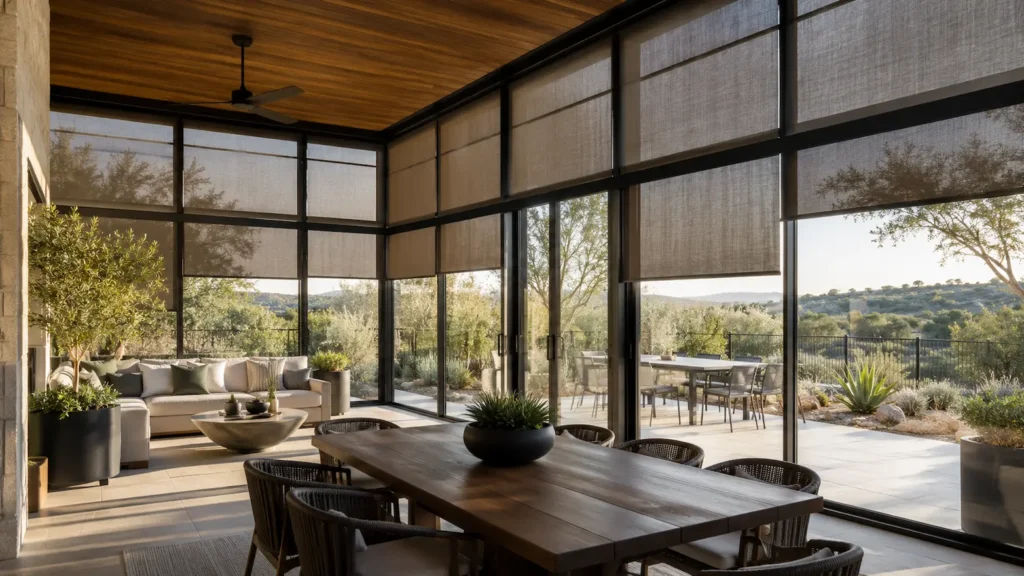
The best time to think about hardwired solar shades is before construction or renovation details are locked in.
Power pathways, shade pockets, wall controls, ceiling conditions, trim, window depth, and lighting layout can all affect the final result. When those elements are planned early, the system can look more intentional and perform better.
In existing homes, hardwired shades may still be possible, but the approach depends on access and structure. In some cases, a hybrid solution may make more sense. What matters is choosing intentionally rather than waiting until the room is already difficult to use.
For solar shades in Austin sunrooms with large glass, early planning can be the difference between a clean integrated system and a solution that feels added on later.
Common Mistakes With Sunroom Shades
Many shade problems come from treating a sunroom like a normal room.
Common mistakes include choosing fabric only by colour, ignoring window orientation, using manual shades on hard-to-reach glass, selecting the same openness factor for every wall, skipping lighting integration, or waiting until the room is already uncomfortable before planning solar control.
Another mistake is assuming darker is always better or that more coverage always means better comfort. A sunroom still needs balance. Too much shade can make the space feel closed. Too little control can leave the room hot and harsh.
A better approach starts with the room’s behavior. Where does heat build? Where does glare hit? Which windows matter most? What view should stay open? When does the room stop feeling comfortable?
Those answers lead to a system that feels designed, not guessed.
How Homeva Designs Solar Shade Systems for Austin Homes
Homeva looks at motorized shades as part of a larger living environment. The glass, sunlight, view, interior design, lighting, wiring, control system, and daily routine all matter.
A sunroom is not solved with one window at a time. It is understood as a changing space. Morning, afternoon, evening, summer, privacy, entertaining, and everyday use all shape the system.
The right solution may include motorized solar shades, hardwired control, shade zones, preset scenes, lighting coordination, and fabric selection based on exposure. The goal is not to make the room complicated. The goal is to make comfort feel effortless.
Those are the standard solar shades Austin homeowners should expect when the space is important to the home’s design and daily life.
A Better Sunroom Starts With Better Solar Control
A sunroom should not be a room that looks beautiful but feels difficult to use. It should feel comfortable in the morning, manageable in the afternoon, and calm in the evening. That takes more than glass, furniture, and good intentions. It takes solar control designed around Austin heat, the room’s exposure, and the way the homeowner actually lives.
High-performance solar shades Austin homeowners choose for sunrooms can reduce glare, help manage heat, protect interior finishes, preserve filtered views, and make the space easier to use throughout the day. When those shades are motorized, hardwired, and integrated with lighting and control systems, the room can adjust without constant effort.
If your sunroom feels too hot, too bright, or too difficult to enjoy during peak daylight hours, contact Homeva to design a motorized solar shade system built around your glass, your views, and the way your Austin home handles the Texas sun.
FAQ
Are solar shades good for Austin sunrooms?
Yes. Solar shades help reduce glare, manage heat, protect interiors, and preserve filtered daylight in sunrooms with strong Texas sun exposure.
Do solar shades Austin homeowners choose still allow a view?
Yes, depending on fabric openness, color, and lighting conditions. Some fabrics preserve more views while still softening sunlight.
Are motorized solar shades worth it?
Yes, especially for large glass, tall windows, hard-to-reach openings, or rooms that need frequent shade adjustments throughout the day.
What are hardwired solar shades?
Hardwired shades use dedicated power instead of batteries, creating a cleaner, more reliable long-term motorized shade system.
Can solar shades help protect furniture?
Yes. Solar shades can reduce direct sunlight exposure that contributes to fading on upholstery, rugs, flooring, artwork, and finishes.
Can motorized shades work with lighting scenes?
Yes. Motorized shades can coordinate with lighting scenes to balance daylight, comfort, privacy, and evening room mood.