
A backyard audio installation turns a pool from something you glance at into something you actually gather around all summer. Central Texas heat keeps people outdoors for half the year, and a yard without real sound just sits there quietly while one with speakers done right pulls the family and guests out the back door until well past dark.
The usual fallback is a portable speaker set on a chair or an old stereo unit hauled out from a closet for the occasion. It survives one cookout, then the battery dies mid-song, and humidity fogs the casing, and the whole thing gets carried back inside within weeks.
Our process at Homeva always begins by watching how a family actually spends time in their yard before recommending a single piece of gear. Weekend laps in the pool call for a different layout than hosting thirty people on a Saturday evening, and getting that groundwork right early is what turns a backyard audio installation from a gadget purchase into the reason people linger.
Standard Speakers Were Never Built for This
A speaker designed for indoor rooms leans on walls to bounce sound back toward a listener, along with steady temperatures and zero direct sun. None of that exists in a backyard. Sound that would normally fill a den instead drifts up and away into open air, so a pool deck ends up sounding thin no matter how far the volume gets pushed.
Austin heat and humidity punish unprotected electronics fast. A speaker cone can warp, wiring corrodes, and audio that sounded sharp in spring turns muddy by midsummer. Choosing gear rated specifically for outdoor exposure sidesteps this, since the housing and seals were designed with this climate in mind.
Coverage area becomes the third problem nobody expects. Sound loses strength far quicker outside than indoors, so a single unit meant for a modest room gets stretched across an entire deck and comes up short. What sounds strong beside the speaker fades to nothing by the far end of the pool, a complaint we hear constantly from anyone who skipped a real backyard audio installation for a quick fix.
Choosing Speakers That Disappear Into the Yard
Weatherproof speakers rely on sealed housings and corrosion-resistant grilles built to handle sun, rain, and chlorine without breaking down. A properly chosen backyard audio installation keeps its clarity years down the road instead of degrading after one rough summer.
Landscape style speakers hide the technology entirely. Some are shaped like stones and tuck into flower beds, while others mount flush behind stone or stucco so a patio reads as clean architecture rather than a display of black plastic boxes. For homeowners who invested real money into landscaping, this matters more than most equipment specs ever will.
Coverage pattern should match the yard’s actual shape rather than a one-size-fits-all approach. A narrow strip beside the house benefits from speakers aimed down that path, while a broad pool deck usually calls for wider dispersion that spreads sound evenly instead of blasting one corner.
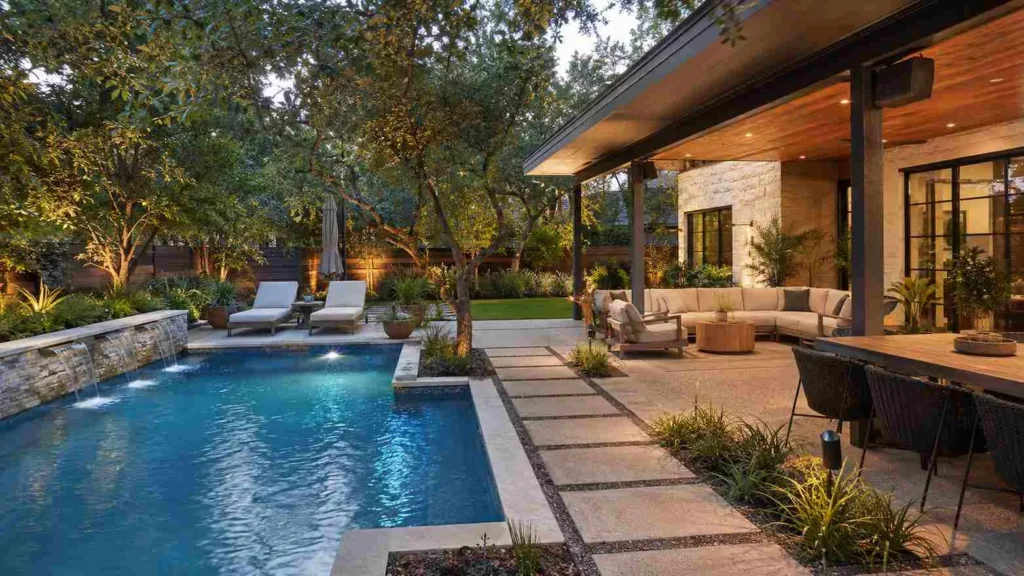
High-Fidelity Sound With Nothing on Display
Great outdoor sound used to mean visible amplifier racks and speaker cable snaking along a fence line, the last thing most homeowners want after finishing a carefully designed backyard. A backyard audio installation today leans instead on buried subwoofers and disguised speakers that leave no trace once landscaping fills back in.
None of that hiding comes at the cost of quality in a well-designed backyard audio installation. At Homeva, we spec modern outdoor drivers that reproduce a wide enough range that music by the pool sounds layered rather than flat, letting vocals, guitar, and bass sit in their own space instead of blurring into one mass of noise.
Bass demands special attention outside since low-frequency sound scatters faster than midrange or treble across open air. A properly sealed subwoofer buried below ground brings back the depth a pool gathering actually wants from music, all without a visible box competing with the furniture for space.
Zoned Sound That Moves With the Party
Nobody stays in one spot during a good pool gathering. People drift from the water to the outdoor kitchen to a shaded corner of the patio, and a backyard audio installation split into zones lets the same music follow that movement instead of leaving gaps between areas.
Zoning also solves the reality that not everyone wants the same thing at the same volume. The pool can stay lively while a quieter seating area nearby keeps the mood calmer, both adjusted from a single app rather than walking to separate units every time somebody wants a change.
Connecting the backyard system to whatever plays indoors keeps a party feeling continuous rather than segmented. Music moving from the kitchen out through the back door to the pool without a pause or restart turns the whole property into one experience rather than a set of disconnected spaces. Partnering with a home audio team that understands both acoustics and outdoor building sequences sidesteps the costliest mistakes, mismatched gear, poor placement, and wiring plans built without watching how a family actually moves through the space.
Where You Put Speakers Matters More Than Price
Placement can make or break a backyard audio installation regardless of how much the equipment itself costs. Speakers set too near the pool edge risk splash exposure even with a weatherproof rating, while ones placed too far away leave the actual swimming area sounding distant and disconnected from the music.
Height plays a bigger role than most homeowners assume. A speaker mounted above head level, whether on a wall, a post, or tucked into a pergola beam, sends sound out across open water rather than letting patio furniture and bodies soak it up at ground level.
With Homeva, safety near water is never optional. Low-voltage speaker cable carries far less risk than higher-voltage lines run close to a pool, and any amplifier gear stays positioned well outside the splash zone, following code that an experienced team accounts for as routine practice.
Getting a Backyard Audio Installation Right Before Anything Gets Poured
The smartest moment to plan a backyard audio installation lands before concrete or pavers go down, not after. Laying conduit while the ground is already open during excavation means cable reaches every intended speaker location with nothing exposed and no need to cut into a finished patio later.
Adding sound to an already finished yard is entirely possible, just more involved. Battery-powered wireless speakers exist for exactly this scenario, sacrificing some long-term reliability in exchange for skipping the trenching a hardwired setup would require through existing hardscape.
Looping in the pool builder and landscaper before the project starts prevents nearly every complication we run into later. A short conversation about where speakers and control gear will sit saves real money compared to reopening a finished yard to add wiring that belonged there from day one.
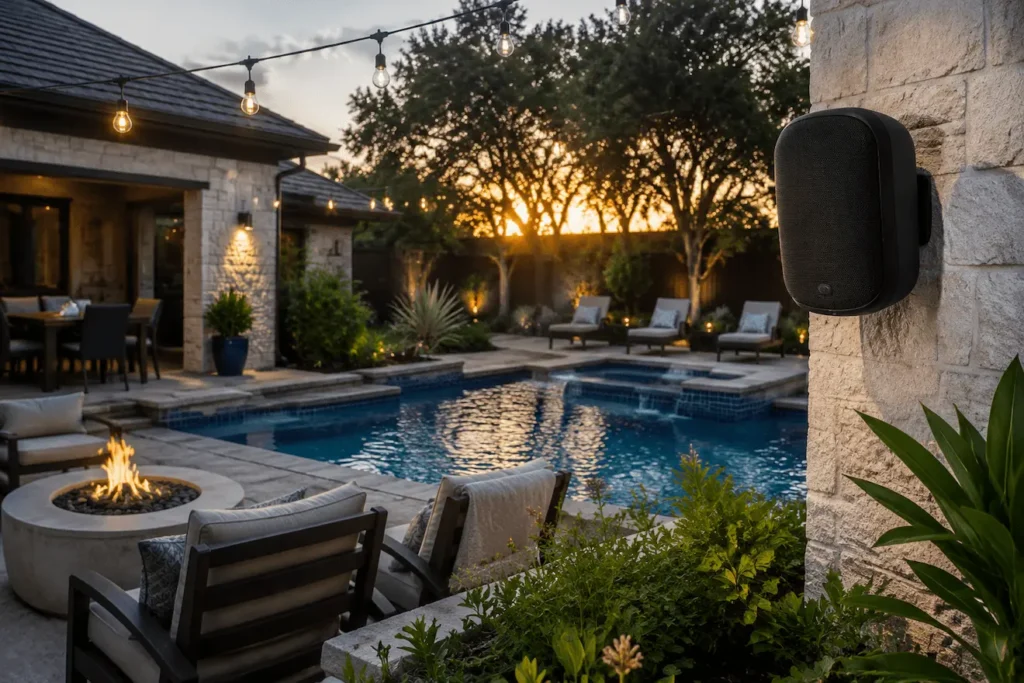
Letting Lighting and Sound Work as One System
Music tells only part of the story when the sun goes down. Linking a backyard audio installation to pool and landscape lighting through shared scenes shifts an entire yard from bright afternoon energy into a softer evening atmosphere, sound included, all without touching speakers and lights as two separate tasks.
Occasion-based scenes take the thinking out of hosting. A quiet dinner setting might combine gentle background music with warm path lights, while a party setting raises volume and switches to brighter accent lighting throughout the yard, triggered from a single control instead of several remotes and switches scattered around the space.
This kind of pairing is what makes a backyard feel like a true extension of the home rather than an accessory added later. It is how we build every Homeva project once sound and lighting come together, letting the technology fade into the background of an evening instead of turning into something a host constantly has to think about.
Standing Up to Real Texas Weather Year After Year
Central Texas throws genuine extremes at outdoor gear, scorching stretches through summer followed by sudden storms and the rare hard freeze come winter. A backyard audio installation specified with this climate in mind holds up across both ends of that spectrum rather than assuming conditions the equipment was never actually tested against.
Sun exposure breaks down cheap plastic housings faster than people expect, which is exactly why quality outdoor speakers use UV-resistant materials instead of standard plastic that cracks and fades within a couple of seasons. That one material decision often separates gear still sounding great in year five from gear already failing by year two.
Upkeep stays minimal when the initial backyard audio installation was handled correctly, usually amounting to a quick check of sealed connections after a major storm rolls through. Gear built on the wrong components tends to need frequent repairs instead, which adds up to more expense over time than simply choosing the right equipment from the start.
Mapping Out Budget, Timing, and the Right Team
Cost for a project like this shifts based on yard size, number of zones, and how much of the wiring goes underground versus wireless. Handling it during new pool construction almost always costs less than retrofitting a finished yard, since cutting into existing hardscape adds labor that new builds simply avoid.
Scheduling deserves the same attention as budget. Folding a backyard audio installation into pool and landscape construction, rather than treating it as a separate step added later, keeps everything on one timeline instead of forcing a second messy phase of work months after the yard is already finished and furnished.
Partnering with our team at Homeva for home audio work means understanding both acoustics and outdoor building sequences, which sidesteps the costliest mistakes, mismatched gear, poor placement, and wiring plans built without watching how a family actually moves through the space. If your backyard deserves sound to match the pool, reach out to our team and we will map a plan around how you entertain.
FAQ
Does a backyard audio installation actually hold up through Texas summers?
Yes, provided it uses proper outdoor-rated gear. Sealed housings and UV-resistant materials handle sustained heat and humidity far better than an indoor speaker pressed into outdoor use.
Is wireless a real option or should everything be hardwired?
Both work depending on the situation. Hardwired setups perform more reliably for primary zones, while wireless suits retrofits where cutting into an existing patio is not practical.
How many separate zones does a typical pool area need?
That depends on layout, though most yards benefit from at least two zones so sound stays even between the water, seating areas, and any outdoor kitchen nearby.
Can speakers stay hidden without hurting sound quality?
Yes, when chosen correctly. Rock-style speakers, buried subwoofers, and flush-mounted architectural units are built specifically to disappear into landscaping without sacrificing clarity.
When is the right time to plan this during a pool build?
Before the deck or patio surface gets poured. Running conduit while the ground is open avoids cutting into finished concrete later, which costs considerably more.