
Motorized drapes voice control turns a beautiful window treatment into a living part of the home’s daily rhythm. Floor-to-ceiling silk panels in a formal dining room, a room-darkening linen in the primary suite, custom velvet in a screening space: each of these is a design decision that deserves an equally considered control experience. Saying two words and watching twelve feet of fabric travel silently to its position, without leaving your seat or interrupting conversation, is not a novelty.
The voice control landscape for residential automation has separated into two distinct categories, and understanding that separation is the first step toward specifying the right integration for a given home.
On one side sits Alexa, Google Assistant, and the consumer-facing platforms that most households already have in some form, offering broad device compatibility and immediate accessibility but operating through cloud infrastructure that introduces latency, privacy considerations, and integration depth that stops well short of what a professionally installed luxury system demands.
On the other side sits Josh.ai, a platform built from the ground up for luxury residential integration, with local processing, natural language understanding that does not require memorized commands that drive the best motorized drape installations in Austin.
At Homeva, the integration conversation begins with how the homeowner moves through their home and what they want voice control to do within it. Motorized drapes voice control is not a product decision; it is an architecture decision, and the right architecture depends on whether the goal is a standalone convenience or a fully coordinated scene layer where the drapes, the lighting, the audio, and the climate respond as one.
What Motorized Drapes Voice Control Actually Requires to Work Well
The premise of voice-controlled motorized drapes sounds simple: you speak, the fabric moves. The technical requirements that make that experience feel effortless rather than clunky are considerably more involved. At the hardware level, the drape motor must be addressable by the voice platform, through either native integration or a bridge protocol that translates between them. Every drape panel becomes individually addressable by room name, position, or scene, without requiring the homeowner to understand the system architecture beneath it.
Microphone placement is the hardware variable most installations underestimate. A home theater with heavy fabric and a motorized drape at the rear presents a very different acoustic environment than an open-plan kitchen-living space with polished concrete.
Josh.ai’s architectural microphones, the Josh Micro and Josh Nano, are designed for in-ceiling and in-wall installation because a room with luxury finishes requires a permanently positioned, directional microphone rather than a countertop device working through a layered acoustic environment. Alexa Echo devices perform reasonably well in simpler rooms; in a primary suite with motorized drapes and multiple soft surfaces, pickup distance and accuracy drop noticeably.
Latency is the variable most visible in daily use. Cloud-based platforms send the voice command to remote servers, receive the instruction back, and transmit it to the device. In favorable network conditions this round trip is imperceptible; in a home with a congested network or a cloud service issue, it introduces delay that undermines the experience of effortless control.
Josh.ai processes commands locally on the Josh Core server, so the drape moves before the homeowner has finished thinking about it, with no audio leaving the home network.
Alexa and Motorized Drapes: What Works and Where It Stops
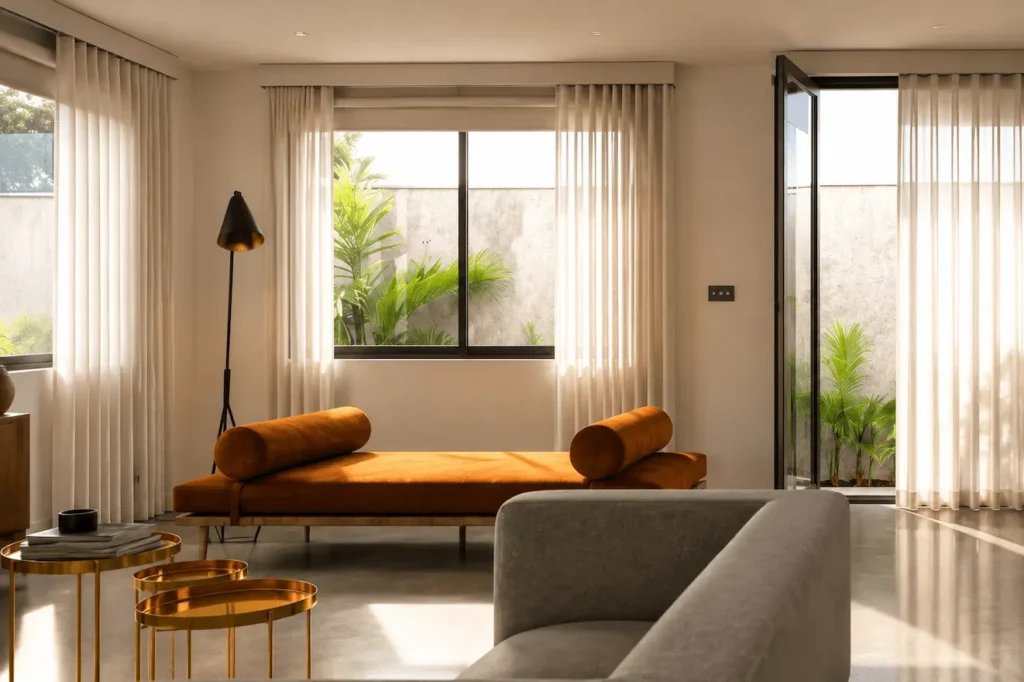
Alexa’s compatibility with motorized drapes voice control scenarios is real and has improved over the past several years. For a homeowner with a simple installation, a Wi-Fi-connected motor, and a consistent network, saying “Alexa, close the bedroom drapes” and having the fabric move is achievable without professional integration. The accessibility of that setup is its genuine advantage: Alexa is already present in many Austin homes, the process is familiar, and the cost of adding basic motorized drapes voice control through Alexa is low.
The limitations emerge when the installation grows beyond a single room. Alexa operates on a flat command model: each device has a name, and commands address it directly. A scene where saying “Alexa, dinner” closes the dining room drapes, dims the lighting, adjusts the thermostat, and queues audio requires Alexa Routines.
Privacy is the consideration that moves some households toward Josh.ai regardless of the functional comparison. Alexa records the audio captured after its wake word and processes it on Amazon’s cloud infrastructure.
Amazon has published detailed privacy policies around how this data is handled, but for a household that has sensitive conversations in the rooms where motorized drapes voice control would be most useful, the fact that audio is leaving the home network at all is a material concern. This is not a hypothetical objection; it is the specific concern that Josh.ai was built to answer, and it resonates particularly in primary suites, home offices, and dedicated entertainment spaces.
Josh.ai: What the Luxury Voice Control Experience Changes
Josh.ai approaches motorized drapes voice control from a different category than Alexa, not because it does more things but because it does the things that matter in a luxury home with more precision, more intelligence, and without the architectural compromises that cloud-dependent platforms require.
The platform’s natural language processing is its most immediately noticeable quality: rather than parsing a memorized command format, Josh understands context and intent the way a well-briefed household assistant would.
“Close everything in the living room for the movie” is a valid command. “Make it darker in here” in a room Josh knows as a screening space will lower the drapes and dim the lights to the scene that matches that description. The system learns the household’s vocabulary over time, so the motorized drapes voice control experience improves with use rather than staying static.
The hardware profile of a Josh.ai installation suits the spaces where luxury motorized drapes live. The Josh Micro installs flush to the ceiling; the Josh Nano integrates into a standard wallplate alongside Lutron keypads. Neither requires a visible device on any surface. In a dining room where every detail of the composition has been considered, an architectural microphone that disappears into the ceiling plane belongs. An Echo device on the credenza does not.
Designing Scenes Around Motorized Drapes Voice Control
The voice command is the last step in a well-designed integration; the scene architecture it triggers is the real work. A motorized drapes voice control integration built around the household’s daily rhythm produces scenes that feel inevitable: the morning scene that opens the east-facing bedroom drapes when the alarm fires, the afternoon scene that lowers the west-facing dining drapes before direct sun warms the room, the evening scene that closes everything as the artificial lighting takes over.
Building scenes that hold across a day requires understanding which rooms the household uses at which hours and how the drapes interact with the lighting and climate systems sharing the same control environment.
A dining room at noon needs different drape behavior than the same room at six in the evening: morning may call for a sheer that diffuses direct sun while preserving the view, while dinner calls for the full lining to create privacy and visual enclosure. Both are available by voice through Josh.ai, coordinated with the Lutron lighting scenes built for the same moments. Our motorized drapes services treat this scene architecture as the central design deliverable, not an afterthought.
The most revealing test of a well-designed motorized drapes voice control integration is what happens when a guest uses it for the first time. A system that requires remembering a device name, a room qualifier, and a specific command syntax was not designed for the way people speak.
A system that understands “close the drapes before it gets too bright” and executes the right response without clarification was. That naturalness is what distinguishes an integration the household uses every day from one that impressed at commissioning and has been ignored since.
The Privacy Dimension That Changes the Specification for Some Homes
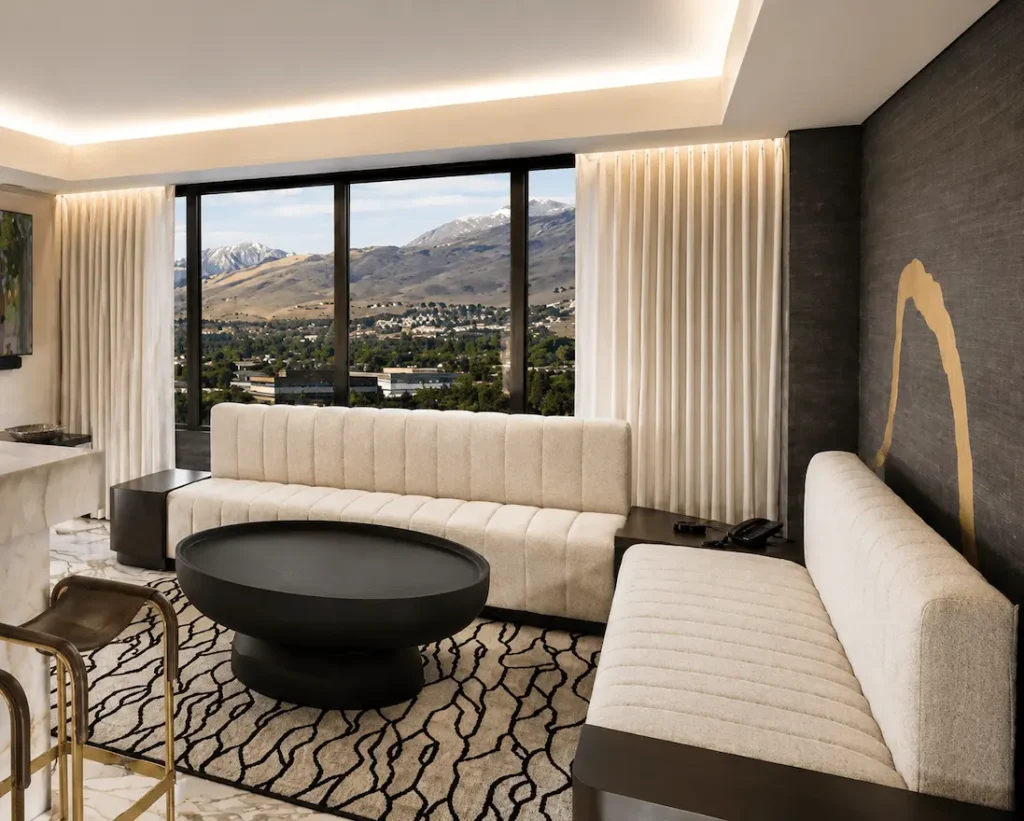
The choice between Alexa and Josh.ai is not purely a feature comparison for every household. For families who use the rooms where motorized drapes voice control would be most valuable for sensitive conversations, the primary suite, the home office, the private dining room, the question of where audio goes after the wake word fires is practical.
Alexa’s audio leaves the home network. Josh.ai’s does not. Josh.ai processes commands on a local server inside the home, under the homeowner’s control, with a hardware switch that disables the microphone entirely when needed.
This consideration carries weight in households where the motorized drapes voice control system lives in rooms used for sensitive conversations, and where control over the home’s information environment matters as much as its physical one.
Neither is inherently wrong, but both deserve to be explicit choices rather than defaults the homeowner discovers after the fact. A professional integrator presents both options honestly rather than defaulting to the familiar consumer platform.
For Austin homeowners whose voice control architecture is being decided alongside the drape specification, the integration conversation belongs early. Microphone locations need to be in the ceiling rough-in plan. The Josh Core server needs a rack location. Lutron scene names need to be chosen with the voice interface in mind.
These are not afterthoughts to a motorized drapes installation; they are part of the same design decision, and resolving them early produces a result that resolving them later cannot replicate. Connect with Homeva, and we will bring the full integration perspective from the first meeting.
FAQ
Can I use Alexa for motorized drapes voice control without a professional installation?
If the drape motor supports a compatible protocol and connects to your Wi-Fi, basic Alexa control is possible without professional integration. For Lutron motor installations, professional programming is required to address individual panels and build scenes; integration depth is limited by Alexa’s Routine architecture compared to a natively integrated platform.
What makes Josh.ai better for motorized drapes voice control than Alexa?
Josh.ai processes voice commands locally rather than sending audio to cloud servers, understands natural language rather than memorized command formats, and integrates natively with Lutron systems by pulling the existing floor plan and scene programming automatically. The result is a more precise, more private, and more contextually aware experience than cloud-based consumer platforms deliver.
Does Josh.ai support motorized drapes voice control for Lutron drape systems?
Yes. Josh.ai integrates natively with Lutron’s RadioRA 3 and HomeWorks QSX processors through the LEAP protocol. Motorized drapes addressed in the Lutron system are immediately addressable through Josh.ai by voice and app, using the same room names and scene identifiers.
Where should Josh.ai microphones go to support motorized drapes voice control in rooms with heavy drapes?
Josh Micro installs flush to the ceiling and is the standard specification for rooms with heavy soft furnishings that absorb sound. Josh Nano integrates into a standard wallplate alongside Lutron keypads where ceiling mounting is not preferred.
Can voice control trigger scenes that include both drapes and lighting?
Yes, and this coordination is one of the primary reasons to integrate motorized drapes voice control through Josh.ai rather than addressing drapes and lighting separately. A single command triggers a Lutron scene that simultaneously positions the drapes, adjusts the lighting, and modifies the climate setpoint.
Is adding motorized drapes voice control disruptive to install in a finished home?
Josh Nano devices integrate into existing wallplate locations without new rough-in. Josh Micro ceiling microphones require a small ceiling penetration and low-voltage cable to the nearest junction point. In a finished home with accessible ceiling cavities the installation is typically non-invasive; new construction allows full ceiling rough-in during framing.