
Gallery lighting is what separates a painting that simply hangs on a wall from one that actually stops people mid conversation. Austin has grown into a real collector’s town over the years, home to institutions like the Blanton Museum of Art and The Contemporary Austin, and plenty of residents now bring that same eye for serious work into their own houses, then light it with whatever recessed can happened to go in above the sofa.
Ordinary home lighting was never built with a painting in mind. General fixtures wash out color, throw a hot glare across glass and varnish, and flatten the texture a piece was meant to show off. A canvas that looks rich and alive under proper gallery lighting can look dull and gray at home under the wrong bulb, even though nothing about the work itself has changed.
At Homeva, we approach a client’s art collection the way a curator approaches a museum wall, as something that earns its own lighting plan rather than getting whatever leftover fixture the rest of the room uses. Someone who has spent years building a collection worth showing deserves light that honors the work, not a bulb picked mainly to keep the room from feeling dim.
Art Asks for Something Different Than the Rest of a Room
Most rooms get lit for function above anything else, enough brightness to cook, read, or move safely from one side to the other. Art wants something else entirely: light built to reveal color, depth, and brushwork honestly instead of just brightening a wall. This is the whole reason gallery lighting exists as its own discipline.
Color temperature matters more here than most homeowners ever expect. A warm bulb picked for a cozy den can quietly shift a painting’s real palette, nudging blues toward green or dulling a red the artist meant to feel bold. Put that same piece under properly tuned light and it can look like an entirely different painting, closer to how it appeared the day it left the studio.
Anyone who spends real time around museums tends to catch this gap the moment they hang a serious piece at home. A canvas that felt vivid under a gallery’s careful lighting design can suddenly feel flat under a house’s general lighting, not because the artwork shifted, but because the light surrounding it never matched what the piece actually needed.
Why Color Accuracy Makes or Breaks a Real Collection
Color rendering index, known as CRI, sits at the heart of good gallery lighting, measuring how faithfully a light source reveals true color compared to natural daylight. Standard household bulbs often land at a CRI fine for everyday living but nowhere near precise enough for fine art, especially work built around subtle gradients or a muted palette.
Tunable white technology pushes this further, letting color temperature itself shift from a warmer evening glow to a crisper, near daylight tone during the hours a piece gets viewed most. Ketra built its name specifically around this kind of light quality, engineering fixtures that track natural daylight with far more precision than typical LED options on the market.
This distinction counts most with pieces leaning on delicate color work, watercolors, quiet contemporary pieces, or photography with a narrow tonal range. Gallery lighting built around honest color rendering protects an artist’s original intent, rather than letting an ordinary bulb reinterpret the work a little differently every single evening.
Ambient, Accent, and Wall Wash: Layering Light the Right Way
A single overhead fixture rarely does a real collection any favors, and this is where thoughtful gallery lighting starts to separate itself from a default builder fixture. Layered lighting pairs ambient light handling the room’s general purpose with dedicated accent light aimed at individual pieces, letting each layer carry its own job instead of asking one fixture to do everything at once.
Wall wash lighting spreads even coverage across a full wall, which suits a grouped collection or a gallery style hallway where several pieces hang side by side. Accent lighting works differently, using a tighter beam trained on one specific piece to give a signature work in a collection the focused presence it deserves.
Balancing these layers correctly is exactly where thoughtful gallery lighting design pulls ahead of track lighting picked off a shelf. Too much ambient light competes with the accent fixtures and flattens everything out, while too little leaves a room feeling like a museum after closing rather than a home someone actually lives in day to day.
Keeping Glare Off Glass and Framed Pieces
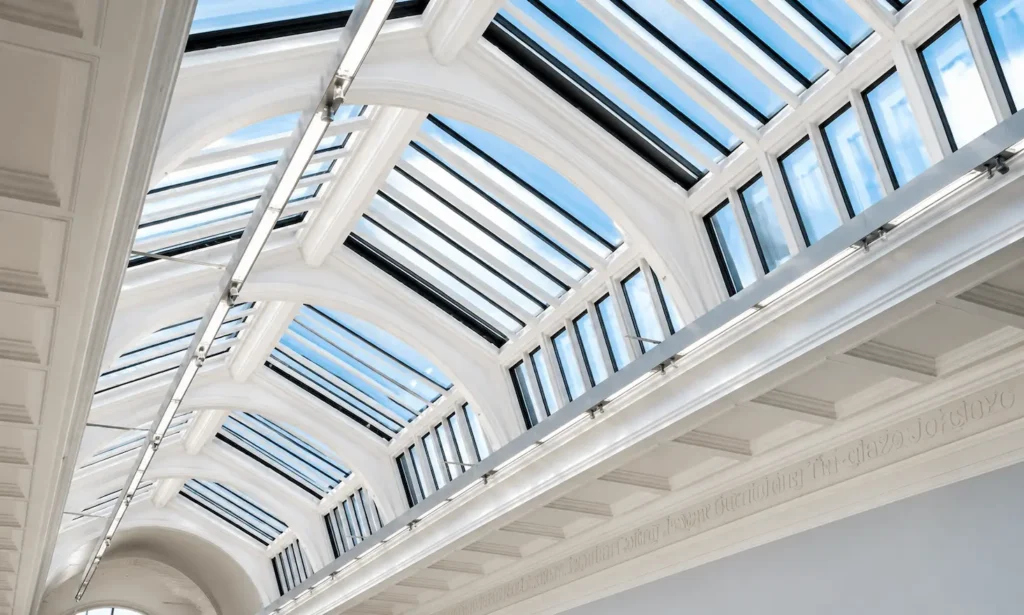
Glare is the real enemy of any serious gallery lighting plan, especially with framed work sitting behind glass or acrylic. A fixture angled wrong throws bright reflection across exactly the section a viewer wants to study, undoing the whole point of lighting the piece in the first place.
Getting the angle right solves most of this before it ever becomes a problem. Aiming a fixture roughly thirty degrees off the wall, rather than straight on, generally avoids the head on reflection a direct angle creates against glass or a glossy varnish, letting the piece read clearly from a normal spot in the room.
Diffusion and beam spread carry just as much weight as angle does. A narrow, harsh beam can blow out the brightest section of a canvas while leaving the rest underlit, whereas a properly diffused beam spreads evenly across the whole piece. Doing this well means weighing angle and diffusion together rather than fixing one while ignoring the other.
Placing Fixtures Without Fighting the Architecture
Recessed and track fixtures need placement that respects a room’s architecture just as much as the art hanging on it, which is where thoughtful gallery lighting earns its reputation. A fixture chosen purely for performance but dropped awkwardly against a ceiling beam or cutting across a clean sightline undermines the very look a collector is trying to achieve.
Ceiling height and ceiling style both shape which fixtures actually work in a given space. A lower ceiling calls for recessed fixtures that sit flush and stay out of the way, while a taller room or a dedicated gallery hallway can carry track systems or picture lights that add their own architectural character without feeling bolted on.
This is where pairing an art eye with an architectural one pays off. Placing fixtures for genuinely good gallery lighting while keeping ceilings, walls, and sightlines clean means weighing two priorities together, something a general lighting installer rarely bothers to do with equal care.
Protecting Art From the Very Light Meant to Show It Off
Light itself can wear down art over time, particularly ultraviolet exposure and excess heat thrown off by the wrong fixture. Watercolors, textiles, and works on paper sit especially at risk, sometimes fading visibly within just a few years under poor lighting decisions.
LED fixtures built for art display generally throw off far less UV and far less heat than older halogen options, making them a meaningfully safer pick for valuable or delicate pieces. Well designed gallery lighting protects a collection the same way a museum protects its own, through fixture choice as much as fixture placement.
Brightness level matters over the long haul too. A piece kept at high brightness for hours every single day ages differently than one lit with more restraint, calibrated to the piece’s sensitivity alongside how often the room actually gets used and viewed across a typical week in Austin.
Scenes That Shift Light Across the Day
A fixed setup rarely matches how a home actually gets lived in over a full day, which is why scene based gallery lighting earns its keep. A morning scene might lean toward a crisper, more neutral tone that mirrors daylight, while an evening scene warms things up for entertaining or a quiet night in without sacrificing color accuracy in the process.
This kind of scene based control turns a lighting plan into something that adapts rather than a fixed installation frozen on one setting forever. A collector hosting friends for dinner can dial in a scene that flatters the room and the art at once, then shift the whole mood once everyone has gone home for the night.
Programming scenes well depends on understanding both a room’s daily rhythm and the actual pieces hanging in it. A collection built around photography behaves differently under shifting light than one built around oil paintings, which is exactly why a generic preset rarely satisfies a genuinely serious collection the way a scene built specifically for it does.
Tying Gallery Lighting Into the Rest of the House
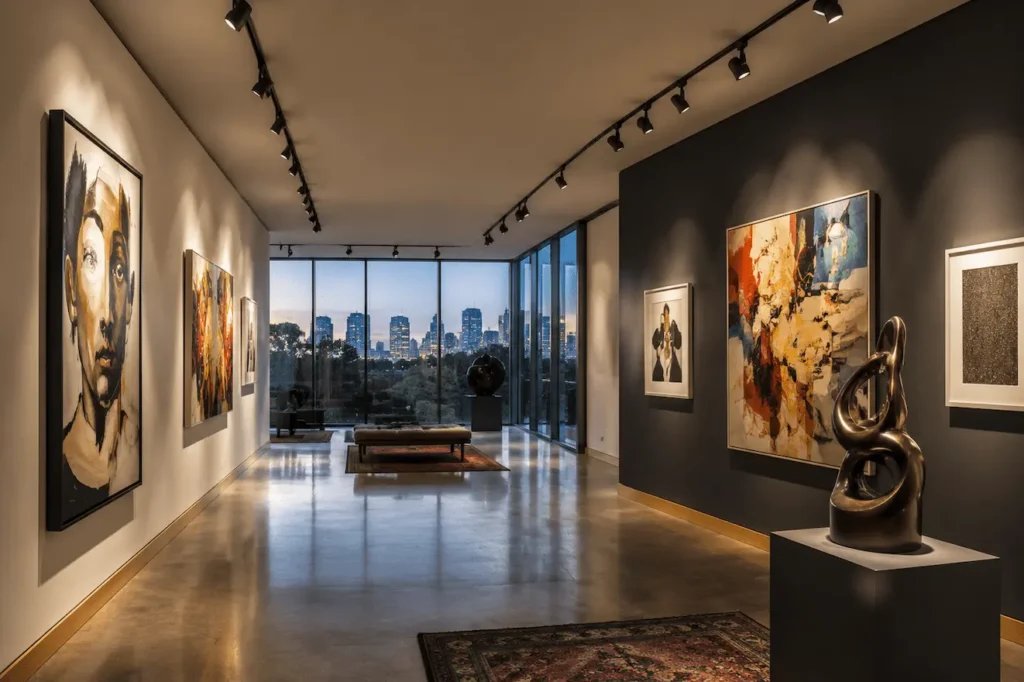
A dedicated art wall or hallway should feel like part of a home’s overall design, not a separate museum bolted onto the side of it. Coordinating art lighting with the broader lighting plan across a house keeps the transition between rooms feeling deliberate instead of jarring.
This matters especially in open floor plans, where a gallery hallway often sits in plain view of a living room or kitchen. Treating the art wall as its own isolated project, disconnected from everything nearby, tends to look disjointed the moment someone standing in an adjoining room takes in both spaces at the same glance.
Single point control ties this together in real life. Adjusting an art focused scene alongside the rest of a home’s gallery lighting from one app, rather than juggling a separate system just for the collection, is what keeps a sophisticated plan from feeling complicated to actually live with every day.
Plan Before the Walls Close, Not After
The smartest time to plan serious gallery lighting is before drywall goes up, whether that means new construction or a full remodel. Running wiring for recessed fixtures, track systems, or picture lights while the walls are still open avoids visible conduit later and leaves far more room to decide exactly where each fixture lands relative to where art will eventually hang.
Adding a proper lighting plan into an already finished home is entirely possible, though it usually means working within whatever ceiling access already exists rather than the ideal placement a blank wall would allow. Deciding where a collection’s most important pieces will hang before finalizing the electrical plan helps avoid compromises down the line.
If your Austin home holds a collection worth lighting the right way, reach out to our team at Homeva and we will design a lighting plan around your specific pieces, alongside coordinating motorized shades where natural light needs managing to protect the work itself.
FAQ
Why does art need lighting different from the rest of a room?
Art calls for accurate color rendering and controlled glare rather than plain brightness, which is why serious gallery lighting focuses on CRI, beam angle, and diffusion in ways ordinary room lighting typically ignores.
Can lighting actually damage art over time?
Yes. Ultraviolet exposure and excess heat from the wrong fixture can fade watercolors, textiles, and paper based work over time, which is why LED fixtures designed for art display matter for anything valuable.
What angle keeps light from reflecting off framed work?
Roughly thirty degrees from the wall generally avoids the direct glare a straight on angle creates against glass or glossy varnish, keeping the piece readable from a normal spot in the room.
Does a home art collection need its own separate lighting system?
No. A well designed plan folds art lighting into the same app and scenes running the rest of the home, so the collection never demands a system of its own to manage.
When should art lighting get planned during a remodel?
Before the walls close, whenever it is possible. Running wiring for gallery lighting while the space is still open avoids visible conduit later and lets fixture placement match exactly where pieces will eventually hang.