
Smart mirrors for Austin primary suites are becoming a natural part of luxury new-build planning, especially in homes where the bathroom is designed as more than a place to get ready. In Austin’s custom home market, primary suites often include large windows, layered lighting, warm natural materials, spa-style finishes, and technology that works quietly in the background. A smart mirror can support that experience, but only when it is planned as part of the room, not added after the design is nearly finished.
For homeowners, builders, and designers, the appeal is easy to understand. A well-integrated smart mirror can improve grooming light, reduce mirror fog, support daily routines, display useful information, and connect with broader smart home scenes. The best results depend on decisions made early: electrical placement, low-voltage access, wall structure, mirror size, lighting temperature, control preferences, and how the mirror will interact with other systems in the home.
In a luxury primary suite, technology should not make the space feel busier. It should make the room feel more intuitive, more comfortable, and better aligned with the way the family lives each day. Homeva approaches this planning by looking at the full bathroom experience, from lighting and controls to privacy, comfort, and smart home integration.
Why Smart Mirrors Are Becoming Part of Austin Primary Suite Design
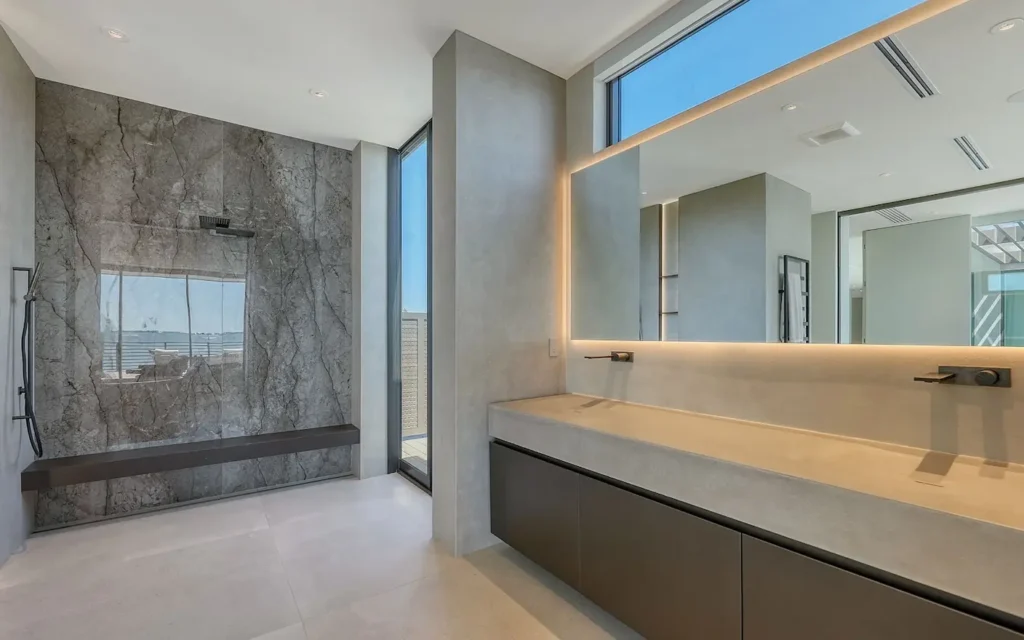
Austin homes often balance modern architecture with comfortable, livable interiors. Many new build primary suites include open bathroom layouts, floating vanities, oversized mirrors, walk-in showers, freestanding tubs, and abundant natural light. These design choices create a refined look, but they also raise practical questions about visibility, privacy, glare, humidity, and control.
Smart mirrors help address those needs in a cleaner way than standalone devices or visible add-ons. Instead of placing clocks, speakers, phone mounts, or extra lighting around the vanity, homeowners can consolidate useful features into one architectural surface.
For a busy household, that may mean morning lighting that feels crisp without being harsh. For a homeowner who gets ready before sunrise, it may mean consistent task lighting without waking the entire suite. For a couple sharing a primary bathroom, it may mean each vanity zone can support different routines while maintaining one cohesive design.
This is where smart mirrors for Austin primary suites become less about novelty and more about daily comfort. The mirror becomes part of the lighting strategy, the technology experience, and the overall design language of the room.
The Design Role of a Smart Mirror in a Luxury Bathroom
A primary suite is one of the most personal spaces in a home. Materials, proportions, and lighting all influence how the room feels. A smart mirror should support that atmosphere, not compete with it.
In luxury bathroom design, mirror selection affects the visual height of the vanity wall, the balance between cabinetry and tile, the reflection of natural light, and the way finishes appear throughout the day. A poorly selected mirror can feel too cold, too bright, or too visually dominant. A well-planned smart mirror can feel built into the architecture.
The smart mirrors for Austin primary suites should also be evaluated in relation to surrounding lighting. Vanity pendants, recessed lighting, toe-kick lighting, shower lighting, and natural daylight can all influence how the mirror performs. Without coordination, the bathroom may end up with too many competing light sources.
A good smart mirror should feel intentional. It should align with the vanity, support the lighting plan, and keep the bathroom visually calm.
Lighting Quality Matters More Than the Number of Features
Smart mirror features can sound impressive, but lighting quality is usually the detail homeowners notice most. In a primary suite, mirror lighting affects shaving, skincare, makeup, hair styling, and the way the room feels during early mornings or late evenings.
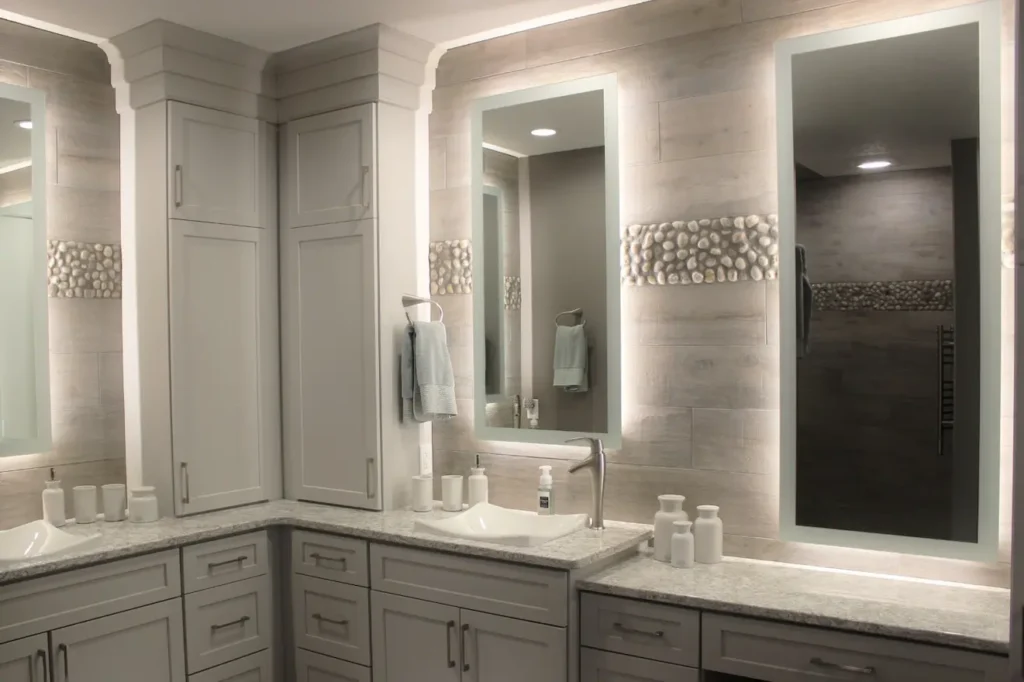
Integrated LED lighting can create a clean look, but it should be selected and calibrated with the surrounding environment in mind. Brightness, dimming range, color temperature, and light direction all matter. Some mirrors provide front-facing illumination, while others create a backlit glow. Each has a different effect.
This is where lighting scenes become valuable. A morning scene may bring the mirror, ceiling lights, and shade position into balance. An evening scene may lower brightness, warm the tone, and create a quieter atmosphere before bed. A guest or cleaning scene may increase visibility without disrupting daily preferences.
For luxury homes, smart mirrors for Austin primary suites should not be chosen only by feature list. The lighting should support real routines and fit the mood of the room.
Anti-Fog Technology and Austin’s Daily Bathroom Reality
Anti-fog functionality is one of the most practical reasons homeowners consider smart mirrors. In a primary suite with a large walk-in shower, steam can quickly make a standard mirror difficult to use. That may not seem like a major problem during design, but it becomes noticeable in daily routines.
In Austin, where many luxury bathrooms are designed with generous shower areas and spa-style layouts, humidity management should be part of the conversation. Ventilation, mirror location, ceiling height, and shower enclosure design can all affect mirror performance. A smart mirror with anti-fog technology is helpful, but it should work alongside a well-planned ventilation strategy.
Smart mirrors for Austin primary suites should be chosen with the actual room conditions in mind. A compact bathroom, an open wet room, and a large primary suite with separate zones may each need a different approach.
Integrated Displays Should Stay Useful, Not Distracting
Some smart mirrors include display features such as time, weather, calendar reminders, or simple status updates. Used well, these features can support a smoother morning. Used poorly, they can make a luxury bathroom feel like another screen-heavy environment.
The best smart bathroom technology is selective. A homeowner may want to see the time while getting ready, check the weather before choosing clothes, or view a simple reminder before leaving the suite. That does not mean the mirror needs to become a full entertainment hub.
For many Austin homeowners, the priority is calm convenience. The primary suite should feel restful, not cluttered with information. Display placement, brightness, and default behavior should be planned carefully. A display that is too visible at night or too busy in the morning can work against the comfort the room is meant to provide.
Control Options: Touch, Voice, App, or Whole-Home Scenes
Control design is one of the most overlooked parts of smart mirror planning. A mirror may offer touch controls, app controls, voice compatibility, or integration with a broader smart home platform. The right choice depends on the family and how they actually use the space.
Touch controls are simple and direct, but they may not be ideal when hands are wet or when the mirror surface needs to stay clean. Voice control can be convenient, but not every homeowner wants voice commands in a private bathroom. App control may work well for setup, but daily use should not depend on opening a phone.
For premium homes, whole-home scene integration often creates the most refined experience. A “Good Morning” scene can adjust lighting, shades, audio, and mirror brightness together. A “Wind Down” scene can soften the bathroom environment without requiring several separate commands.
Bathroom technology should be easy for everyone in the household to use. If one person understands it and everyone else avoids it, the design has not succeeded.
Low-Voltage and Electrical Planning Should Happen Early
The best time to plan a smart mirror is before walls are closed, tile is installed, and cabinetry is finalized. Retrofitting may be possible in some cases, but new construction offers a better opportunity to hide wiring, coordinate power, plan control locations, and protect the clean look of the bathroom.
Smart mirrors may require dedicated power, low-voltage pathways, network considerations, or control integration depending on the selected model and system design. Placement also matters. The mirror must align with vanity dimensions, sink locations, lighting plans, wall blocking, and finished materials.
Coordination between the homeowner, builder, designer, electrician, and smart home integrator helps prevent expensive finish-stage problems. Smart mirrors for Austin primary suites should be part of the early technology conversation, not a late accessory chosen after finishes are already ordered.
Privacy and Comfort in the Primary Suite
Bathrooms require a different level of privacy than other rooms. Any connected technology in a primary suite should be evaluated with that in mind. Homeowners should understand what the mirror does, what data or connectivity it may use, and how controls are managed.
Not every smart mirror needs advanced connectivity. In some homes, the right mirror may focus on lighting, anti-fog performance, and simple control. In others, integration with scenes, audio, or home automation may be appropriate. The best choice depends on the homeowner’s comfort level, the platform being used, and the broader privacy approach of the home.
Comfort also includes visual quiet. A mirror that glows too brightly at night, displays information when it is not needed, or requires constant adjustment can reduce the sense of calm in the suite. A premium smart home experience should feel intentional and restrained.
Homeva approaches this type of planning by looking at how the room will be used, who will use it, and how the technology can support the routine without making the space feel over-programmed.
Smart Mirrors and Motorized Shades in Austin Homes
Austin primary suites often include large windows, sliding doors, or views toward outdoor living areas. Natural light is one of the reasons these spaces feel luxurious, but it also affects privacy, glare, and heat.
A smart mirror can work better when it is coordinated with motorized shades or drapes. For example, a morning scene may open shades partially while setting mirror lighting to a comfortable level. In the evening, a privacy scene may close shades, dim bathroom lighting, and prepare the suite for a calmer routine.
Shade fabric selection also matters. Opacity, openness factor, and room orientation all influence privacy and light control. A west-facing primary suite may need different planning than a shaded interior bathroom or a room with clerestory windows.
When Smart Mirrors for Austin Primary Suites are planned alongside motorized window treatments, the room can respond more naturally to daylight and privacy needs. The homeowner does not have to think through every setting manually.
Common Planning Mistakes With Smart Mirrors
The most common smart mirror mistakes happen when the mirror is selected too late or treated as a standalone purchase. In a luxury bathroom, that can lead to visible cords, awkward controls, poor lighting balance, or a mirror that does not align with the vanity design.
Another mistake is choosing features before defining the routine. A homeowner may be drawn to a mirror with many functions, only to use two of them. A better approach starts with questions. Who uses the bathroom? What happens in the morning? Is the room shared? Does the homeowner prefer warm evening lighting? Is privacy needed during the day? Will the mirror be part of whole-home scenes?
Smart mirrors for Austin primary suites should be evaluated with the whole room in mind: design intent, control method, electrical needs, finish coordination, privacy, humidity, and long-term serviceability.
Why Professional Integration Creates a Better Luxury Experience
A smart mirror can be purchased as a product, but a primary suite experience has to be designed. That difference matters in high-end Austin homes, where technology is expected to feel invisible until it is needed.
Professional integration helps align the mirror with lighting scenes, shade control, audio zones, control interfaces, and the homeowner’s preferred routines. It also helps avoid overcomplication. The goal is not to fill the bathroom with technology. The goal is to make the space easier to use, more comfortable, and visually refined.
For builders and designers, early coordination can reduce rework. For homeowners, it can make the finished suite feel more cohesive. For families, it can make the system easier to understand and maintain.
A well-designed smart mirror should feel like part of the architecture. The lighting should feel natural. The controls should feel obvious. The features should support real life. The room should still feel like a luxury primary suite, not a technology showroom.
Planning Smart Mirrors for New Build Homes in Austin
New construction offers the best opportunity to get smart mirror planning right. Before the mirror is selected, the project team should understand vanity dimensions, lighting goals, wall conditions, wiring needs, network preferences, control locations, and the overall smart home platform.
This is especially important in Austin custom homes where primary suites may include layered lighting, motorized shades, large closets, integrated audio, privacy glass, heated floors, or adjacent wellness spaces. Each system may be simple on its own, but the user experience depends on how they work together.
Smart mirrors for Austin primary suites should be discussed during the broader smart home planning phase. That allows the mirror to be coordinated with the rest of the home rather than installed as an isolated feature.
Homeva helps homeowners, builders, and design teams think through these details before they become expensive finish-stage problems. From lighting behavior to control design and smart home compatibility, the planning process should protect both the look of the space and the way it functions every day.
Bringing Smart Mirror Design Into Austin Primary Suites
The best bathroom technology does not ask for attention. It supports the rhythm of the home. In a primary suite, that can mean better light in the morning, less fog after a shower, privacy that responds naturally, audio that feels subtle, and controls that make sense without explanation.
Smart mirrors are part of a larger shift in luxury residential design. Homeowners want spaces that feel personal, calm, and efficient, but they do not want the home to feel complicated. That is why planning matters. The mirror, lighting, shades, audio, and controls should all serve the same experience.
For Austin homeowners planning a new build or primary suite upgrade, the smartest decision is often made before the product is selected. It starts with understanding the room, the routine, and the systems that will shape daily comfort.
Homeva designs smart home technology around the way luxury homes are actually lived in. In the case of smart mirrors for Austin primary suites, Homeva can help plan the lighting, controls, integration, and installation strategy before key construction and finish decisions are locked in. Contact us to discuss smart mirror planning for your Austin primary suite.
FAQ
Are smart mirrors worth it for a luxury primary suite?
Yes, when planned well. They can improve lighting, reduce fog, support routines, and create a cleaner bathroom design.
When should smart mirrors be planned in a new build?
Plan them before walls close, tile is finalized, and electrical locations are locked. Early coordination helps prevent visible wiring and layout issues.
Can smart mirrors connect with lighting scenes?
Many can, depending on the model and control system. Integration should be reviewed before purchase to avoid compatibility problems.
Do smart mirrors work well in humid bathrooms?
They can, especially with anti-fog features and proper ventilation. Room layout and shower placement should still be considered.
Can Homeva integrate smart mirrors with shades and audio?
Yes. Homeva can coordinate smart mirrors with lighting, motorized shades, audio, and whole-home control systems.