
Solar heat gain turns an otherwise stunning room into a place nobody wants to sit by two in the afternoon. Austin’s newer builds favor towering glass and open sightlines, and that beauty comes with a living room that swelters at the same hour every day, no matter the thermostat setting.
Glass does not stop sunlight; it just redirects it. Rays pass through a window, strike a rug or countertop, and turn into trapped warmth with no way out, especially where a wall faces west and catches hours of low, direct sun each afternoon.
At Homeva, our process starts with watching a house, not guessing at it. We walk a property at different points in the day to see exactly where sun lands, for how long, and on what, since that groundwork is what turns fabric, motors, and scheduling from trial and error into an actual plan.
Big Glass and Open Layouts Make the Problem Spread
A single glass wall inside a home split into separate rooms stays fairly contained. Knock down those walls for an open concept, and that same window now spreads solar heat gain across the whole ground floor, since nothing stands between the heat and the kitchen or wherever the family happens to be sitting.
Tall ceilings raise the stakes further. Homes we service around West Lake Hills and Barton Creek often carry twelve- or fourteen-foot great rooms, giving heat more room to rise and linger before it reaches a return vent.
Direction of exposure changes everything here. A south wall deals with steadier, higher-angle sun through the core of the day, something a shallow overhang can help manage. A west wall gets hit with low, harsh glare right as everyone comes home, which calls for its own fabric strategy rather than one blanket solution.
What Actually Blocks Solar Heat Gain Through Fabric
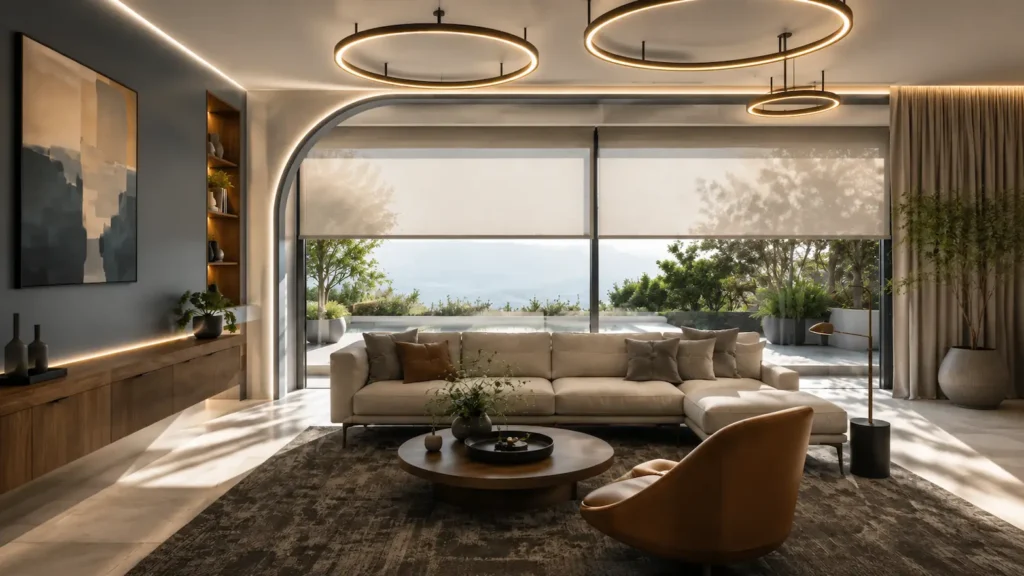
Two numbers separate a fabric that performs from one that just looks nice. Openness factor shows how tightly a weave is built, meaning how much solid material sits between the gaps. A dense three percent weave holds back far more heat and glare than a loose ten percent weave, though your view outward narrows.
The other figure worth knowing measures how much radiation reaches your living space once it passes through both glass and fabric. A lower number always wins on performance, though going too low can rob a sun-loving room of natural brightness. Color matters too, since lighter weaves bounce more sunlight back out while darker ones tend to soak it in.
Choosing a fabric purely because it matches your rug or your walls is how a gorgeous shade ends up failing on the one window that needed it most. Start with what that window demands given its exposure, then find a finish inside that range that still fits the room’s design.
Hardwired Power Keeps the Schedule Honest
The power source behind a shade decides whether the whole system holds up under real, daily use. Battery shades handle occasional privacy needs fine, but a shade cycling multiple times a day to track the sun burns through a charge fast, and a dead battery on your hottest window in July defeats the point of installing it.
Wired shades sidestep that risk completely. Run a motor at 24 or 30 volts, and the schedule fires the same way, every day, every season, with nobody thinking about charge levels. That dependability is the actual backbone of a strategy meant to fight solar heat gain, not a nice extra.
This is exactly why we advocate for planning low voltage wiring early, ideally during framing on new construction or before walls close on a remodel, since solar heat gain planning only gets harder once finishes are in place. Loop in the electrician before drywall goes up and every high exposure window gets wired cleanly, with nothing visible and no scrambling later to retrofit a fix.
Sun Tracking Scenes That Run Without Any Reminders
The strongest shade setup is the one a family forgets is even there. A scene built around the sun’s position starts lowering west-facing shades the moment solar heat gain begins climbing, well before anyone notices heat gathering near the couch or a glare washing out the television.
This matters most in households where multiple people share the space, and nobody consistently remembers to adjust a blind by hand. Automation removes that entirely. The house does its job regardless of who forgot, who is out of town, or who was too busy to think about the sun that day.
Seasons shift the equation too. A schedule dialed in for July sun angles fails by November, when the sun tracks lower through a different path across the same glass. We build that shift straight into the programming, so nothing needs adjusting twice a year to keep pace with the calendar.
The Real Line Item on Your Monthly Utility Bill
Unshaded west-facing glass adds serious solar heat gain to a cooling system on a scorching Texas afternoon, pushing the HVAC into longer, more frequent cycles just to hold an easy setpoint. Homeowners often blame an undersized unit when the real issue is glass letting heat pour in unchecked.
Stopping solar heat gain before it enters the room shrinks the workload your system carries, which means shorter cycles and less mechanical strain over years of daily use. Savings vary with orientation and glass area, but the mechanism holds wherever sunlight drives a room’s temperature swings.
Fewer running hours means a smaller bill, and across a full Austin summer that gap adds up in a way homeowners genuinely notice. Winter flips the benefit, letting shades stay open at midday for passive warmth before closing at night to hold heat in. At Homeva, we build our motorized shades around platforms meant to work cleanly with the rest of a home, so a family ends up with one point of control instead of three apps for basic daily comfort.
Fading Furniture Tells a Story Nobody Wants
Solar heat gain is only part of what sunlight carries into a room. Ultraviolet rays wear down fabric, wood, and artwork slowly, often invisibly, until a chair or rug looks noticeably duller than a piece that never sat in direct light. In a home full of premium finishes, that erosion becomes a real financial loss.
A properly chosen fabric filters UV rays while still letting in enough daylight that a room feels open instead of shuttered. This is a slightly different conversation than blocking heat alone, since a fabric can excel at one and fall short on the other, which is why both properties deserve equal attention during selection.
Hardwood floors suffer most in open layouts with heavy west or south exposure, sometimes showing visible discoloration within a single unmanaged season. Shades that close automatically during peak sun hours guard those floors without anyone needing to remember a thing.
Wire It Early or Pay for It Later
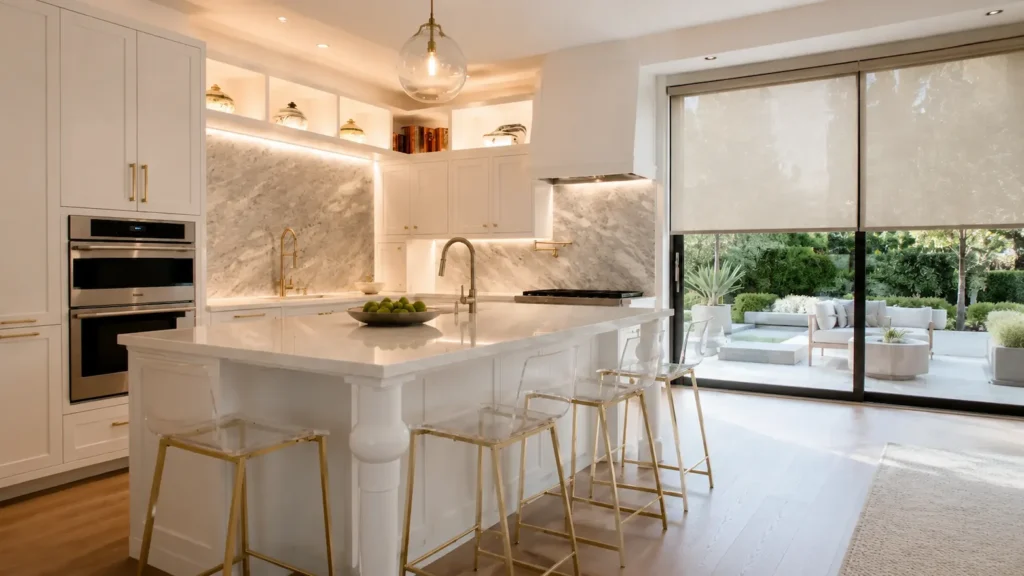
New construction hands you the cheapest, cleanest chance to solve this before it becomes a problem. Low-voltage lines for shade motors run alongside the rest of your electrical during framing, meaning every high-exposure window gets automated with nothing visible and no compromise to the finished look.
Retrofitting an already finished home is doable, just more involved. Opening drywall in select spots to run new wiring adds cost and time new construction skips outright, so ranking windows by how much solar heat gain they let in helps stretch a retrofit budget where it matters most.
Remodels tend to land in a sweet spot for solving solar heat gain, since walls are already open for other reasons. Folding shade wiring into whatever electrical work is already underway sidesteps a second messy phase of construction and usually costs less than tackling wiring as its own job later.
Shades Belong Inside a Bigger System
A shade schedule fighting solar heat gain entirely on its own leaves real value untapped. Position works best as one piece among several, alongside lighting, climate, and security, all managed through a single system rather than a scattered handful of apps nobody feels like juggling every day.
Compatibility trips up more automation projects than almost anything else, particularly when shades, lighting, and audio come from brands never designed to speak to one another. This is why Homeva builds every project around platforms chosen to work together from the start.
A shade lowering to fight afternoon glare can trigger a lighting scene in that same instant, keeping a room feeling steady instead of suddenly dim. That kind of layering is what turns a smart home into something that feels effortless rather than something a family has to manage.
Find Someone Who Designs for Sun First
Any strategy for solar heat gain starts as a design conversation before it becomes a device conversation. A system installed without regard for solar heat gain patterns specific to a home can underperform even when every component works exactly as advertised, leaving a family with the same hot room and a fancier remote.
Getting it right means walking the property, reading its real exposure across different hours, and building a plan around the architecture, the family’s routine, and the budget together, rather than pulling shades off a catalog page and hoping for the best. That difference decides whether a system earns daily use or ends up ignored within a year.
If your Austin home overheats by mid-afternoon or your finishes seem to be fading faster than they should, reach out to our team, and we will walk your floor plan with you to build a strategy that actually fits your exposure.
FAQ
Does managing solar heat gain really lower my cooling bill?
Yes, and noticeably. Less radiant heat entering a room means shorter, less frequent AC cycles, which shows up directly on your bill, especially in homes with significant west or south glass.
Why do wired shades beat battery-powered ones here?
A shade tracking the sun daily drains batteries fast. Wired power removes that concern, so the schedule holds steady every day regardless of season or remaining charge.
Can an already built home still get this kind of upgrade?
Absolutely. Retrofits usually start with the worst offending windows, typically large west- or south-facing glass, and involve some coordination since certain walls may need opening for wiring.
Will fabric built to block heat make my rooms feel dark?
Not when specified correctly. Openness and color can be balanced to cut real heat and glare while a room still feels bright and open rather than shuttered or closed in.
When should shade wiring get planned during a new build?
Before framing closes. Coordinating with your electrician at rough-in keeps every wire hidden and avoids the steeper cost of running lines after finishes are already complete.