
Architectural lighting design can change the way a room feels without asking for attention. The best lighting does not always come from a fixture that wants to be seen. Sometimes it comes from a quiet ceiling line, a soft wall wash, a recessed detail above cabinetry, or a scene that shifts the mood of the room before anyone notices the technology behind it.
That is where hidden fixtures and recessed smart solutions become valuable. They help a home feel polished without making the lighting feel decorative, busy, or added after the fact. The room still feels like the room. The architecture feels clearer. The materials look richer. The evening feels softer.
At Homeva, lighting is treated as part of the home’s design language, not just a utility. A switch can turn lights on. Architectural lighting design does something more careful. It decides where the light should live, how it should move across surfaces, and how the home should feel at different hours of the day.
Why Lighting Should Follow the Architecture First
A room usually tells you where the lighting belongs before any fixture is selected. Ceiling height, wall texture, millwork, artwork, window placement, stone, wood, cabinetry, and furniture all shape the right lighting plan.
This is where homeowners often start too late. They choose beautiful fixtures, then discover the room still feels flat at night. A pendant may look stunning during the day, but it cannot carry the whole space after sunset. Recessed lights may provide coverage, but coverage alone rarely creates mood.
Architectural lighting design starts with the room’s structure. Where should the eye go first? Which surfaces need depth? Which areas should stay quiet? Which details deserve a softer glow rather than direct light?
When those questions lead the process, lighting stops feeling random. It begins to support the home the way trim, stone, flooring, and furniture already do.
Hidden Lighting Fixtures Work Best When They Feel Inevitable
Hidden lighting fixtures are not about hiding technology because technology is unattractive. They are about letting the result feel effortless.
A concealed light in a cove can lift a ceiling without adding visual clutter. A recessed linear detail can make a hallway feel longer, calmer, and more refined. Under-cabinet lighting can give a kitchen better function without making the room feel technical. Toe-kick lighting can guide movement at night without fully waking the space.
The key is restraint.
Hidden lighting fixtures should feel like they belong to the architecture, not like a trick added for effect. When the glow is too bright, too cold, or placed without purpose, the room can start to feel theatrical. When it is planned with care, the light almost disappears into the structure.
That quietness is often what makes architectural lighting design feel premium.
Recessed Smart Lighting Can Do More Than Brighten a Room
Recessed smart lighting is often misunderstood. Many people think of it as a ceiling grid, evenly spaced and mostly practical. That approach can help with general visibility, but it rarely creates a memorable space.
A smarter plan treats recessed lighting as one layer among several.
Some recessed fixtures may provide ambient light. Others may highlight art, stone, shelving, or a textured wall. Some may support task areas, while others remain dimmed most of the time to keep the space warm and calm.
With smart control, these layers can behave differently throughout the day. A kitchen can feel bright and focused in the morning, relaxed during dinner, and soft during late evening. A living room can shift from everyday use to entertaining to movie mode without the homeowner adjusting every circuit manually.
Architectural lighting design becomes stronger when recessed lighting is not asked to do everything. It should do the right thing, in the right place, at the right intensity.
Mood Comes From Layers, Not Brightness
Mood is not created by simply dimming one group of lights. It comes from the relationship between layers.
Ambient light gives the room a base. Task light supports practical activity. Accent light adds depth, contrast, and visual interest. Decorative light can bring personality, scale, or a focal point. Hidden light can soften transitions and make architecture feel more dimensional.
When all of those layers are controlled separately, the home becomes much more flexible. A room no longer has one nighttime identity. It can change depending on the hour, the season, the activity, and the people using it.
That is especially important in open spaces. A kitchen, dining area, and living room may share one footprint, but they do not share the same lighting needs. Food prep needs clarity. Dining needs warmth. Lounging needs softness. Entertaining needs balance.
Architectural lighting design gives each zone its own role without breaking the flow of the home.
The Ceiling Should Not Carry the Entire Lighting Plan
Recessed lights are useful, but they can become a problem when they are the only strategy. Too many ceiling lights can make a room feel flat, even when the fixtures are expensive and well installed.
Light needs vertical surfaces. Walls, artwork, shelving, drapery, stone, and millwork all help a room feel alive. When light only comes from above, faces can look shadowed, textures may disappear, and the space can feel more like a showroom than a home.
Hidden lighting fixtures help solve this by bringing light into architectural edges. A glow behind a floating vanity, a line of light inside shelving, or a soft wash along a feature wall can create dimension without adding visible hardware.
That kind of detail matters because people experience rooms through surfaces, not floor plans. The right lighting helps those surfaces speak.
Smart Control Makes the Design Easier to Live With
A beautiful lighting plan can still fail if it is difficult to use.
This is where smart control becomes essential. The homeowner should not have to remember which dimmer controls the cove, which switch adjusts the art light, and which keypad changes the recessed fixtures above the seating area.
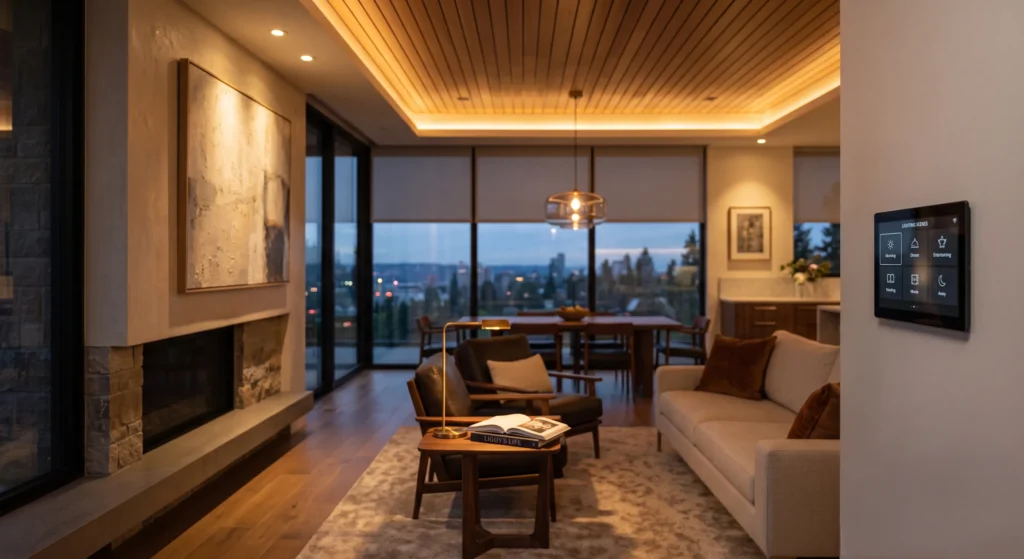
A refined system turns complex lighting into simple scenes.
Morning. Cooking. Dinner. Entertaining. Reading. Movie. Night. Away.
Each scene can adjust multiple layers at once. Hidden lighting fixtures can lower softly. Recessed smart lighting can dim to a warmer level. Decorative fixtures can stay present without overpowering the room. Shades can coordinate with daylight and privacy needs when the system is designed that way.
Architectural lighting design should feel sophisticated in the background and simple in the hand. The homeowner should feel the difference without managing every detail.
Recessed Lighting Placement Should Respect Furniture and Life
Lighting plans are often drawn before furniture decisions are final. That can create problems later.
A downlight may land directly above a sofa cushion instead of a coffee table. A fixture may miss the artwork it was supposed to highlight. A hallway may feel too bright while the reading chair beside it stays underlit. A kitchen island may look good in plan view but feel uneven once people actually cook there.
Recessed smart lighting should be placed around how the room will be used. Seating, walking paths, counters, tables, beds, mirrors, and artwork all matter.
This is why architectural lighting design needs both technical planning and design sensitivity. A fixture location is not just an electrical point. It affects comfort, glare, shadow, focus, and mood.
When the layout respects real life, the lighting feels natural.
Hidden Fixtures Need Clean Construction Coordination
Hidden lighting looks simple when it is finished. During planning, it asks for careful coordination.
Cove lighting needs the right depth and profile. Linear channels need clean placement. Millwork lighting needs service access. Cabinet lighting needs power, driver locations, and cable planning. Recessed fixtures need ceiling clearance, beam spread review, trim selection, and dimming compatibility.
When those details are ignored, hidden lighting can become harder to maintain or less elegant than expected. A visible driver, uneven glow, awkward shadow line, or harsh LED reflection can interrupt the entire design.
A good result depends on more than the fixture. It depends on the space built around the fixture.
Homeva’s approach to home lighting design fits this kind of work because lighting, shades, automation, and control are planned as connected parts of the home. The system should feel clean because the infrastructure behind it was considered early.
Color Temperature Shapes How Materials Feel
The same room can feel entirely different under different color temperatures.
Warm light can make wood, stone, leather, and fabric feel richer. Cooler light can support clarity in work areas but may feel less comfortable in bedrooms, dining rooms, and evening living spaces. Tunable lighting can help bridge those needs when the system is designed with intention.
Architectural lighting design should account for materials before final settings are chosen. A white wall, a walnut cabinet, a limestone fireplace, and a marble surface will each respond differently to light.
This is where mockups, testing, and thoughtful calibration matter. The goal is not to chase one perfect setting for every room. The goal is to give each area a light quality that supports its purpose and its materials.
The most refined homes usually feel warm without feeling dim, bright without feeling harsh, and dramatic without feeling overdesigned.
Glare Is the Detail That Can Ruin the Mood
Glare is one of the fastest ways to make expensive lighting feel uncomfortable.
It can come from exposed recessed fixtures, reflective countertops, poorly angled art lights, bright under-cabinet strips, or visible LEDs inside architectural details. The issue is not only brightness. It is where the eye meets the source.
Hidden lighting fixtures should reduce glare, not create a new version of it. Recessed smart lighting should be selected with trims, beam angles, and placement that protect comfort. A room can be technically well lit and still feel unpleasant if the fixtures are visually aggressive.
Comfort is part of luxury.
The best architectural lighting design considers where people sit, stand, recline, cook, read, and walk. Light should support those moments without forcing the eye to fight the room.
The Best Lighting Scenes Feel Personal
Preset scenes should never feel generic. A home does not need “bright,” “medium,” and “dim” as its only moods.
A better lighting scene reflects how people actually live.
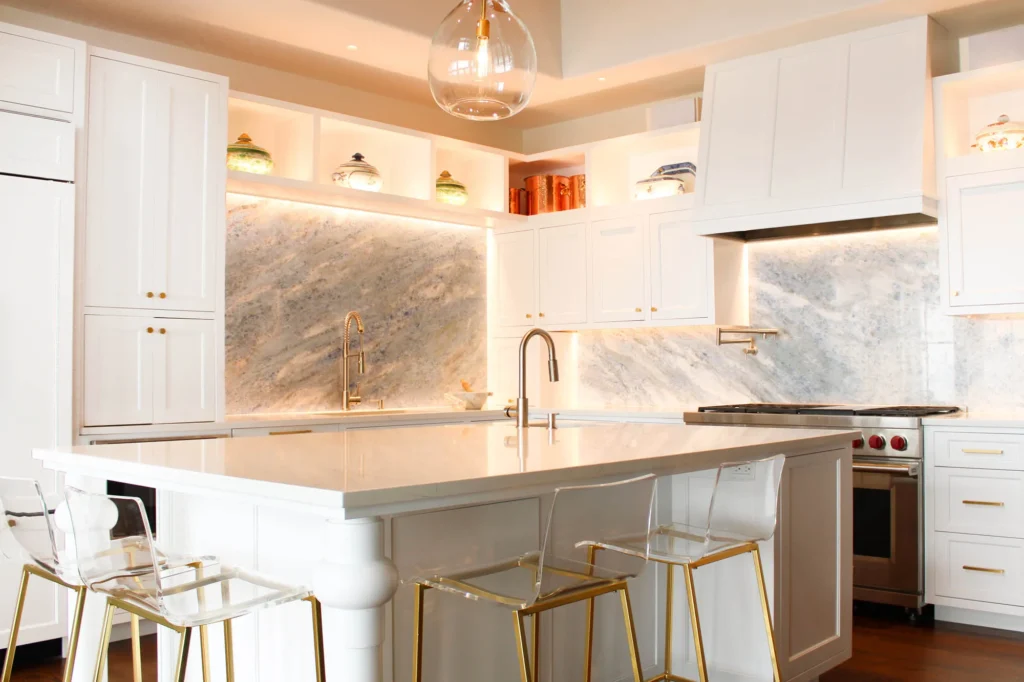
A kitchen may need a morning scene that supports coffee, breakfast, and school routines. A dining room may need one scene for family meals and another for hosting. A primary bedroom may need soft evening light, practical closet light, and a nighttime path that does not disturb rest. A media room may need the screen, recessed smart lighting, accent lighting, and pathway light to work together.
Architectural lighting design becomes more valuable when it learns the rhythm of the home. The system should not feel like a menu of features. It should feel like the house understands the moment.
That kind of control is where smart lighting becomes more human.
How Homeva Thinks About Home Lighting Design
Homeva designs lighting around the way a home should feel, not only the way it should function. That means the visible result and the hidden system both matter.
A lighting plan may include recessed smart lighting, concealed linear details, keypads, scenes, dimming control, daylight coordination, shades, and integration with other smart home systems. But the homeowner should not experience all of that as complexity.
The experience should feel calm.
Walk into the room, press one button, and the home settles into the right mood. Host dinner, and the lighting supports the table without flattening the room. Watch a movie, and the space lowers into comfort without becoming completely dark. Wake up early, and the lighting helps the morning begin gently.
That is the real purpose of architectural lighting design. It brings technical control into the home without making the home feel controlled by technology.
Hidden Technology Should Make the Room Feel More Like Itself
The best lighting does not compete with architecture. It reveals it.
Hidden fixtures can make a ceiling feel lighter. Recessed smart lighting can guide the eye without breaking the visual line. A soft wall wash can make art feel grounded. A carefully dimmed cove can turn a room from functional to intimate without adding one more object to the design.
When those pieces work together, the room does not feel automated. It feels composed.
That is the difference between installing lights and designing with light. One solves darkness. The other shapes experience.
A More Refined Home Starts With Better Light
Architectural lighting design should not feel like a final layer added after furniture, finishes, and automation have already been decided. It belongs near the beginning of the design conversation because it changes how every surface is seen.
The right hidden fixtures can protect the clean lines of the room. The right recessed smart lighting can support daily life without visual clutter. The right scenes can make a home feel softer, brighter, quieter, or more alive depending on the moment.
For design-sensitive homes, that level of control matters. Light is not just what makes the room visible. It is what helps the room feel complete.
If you are planning a new lighting system or refining a home that already feels unfinished after dark, Homeva can help you create architectural lighting design that feels integrated, calm, and built around the way you actually live. Contact Homeva to plan a lighting design that supports the architecture, the mood, and the daily rhythm of your home.
FAQ
What is architectural lighting design?
Architectural lighting design uses light to support structure, mood, materials, and daily function instead of treating fixtures as isolated decorations.
Are hidden lighting fixtures worth it?
Yes, when they are planned well. They can add depth, softness, and visual refinement without adding clutter.
Is recessed smart lighting better than standard recessed lighting?
It can be better because it allows dimming, scenes, schedules, and more flexible control across different room moods.
Can architectural lighting design work in an existing home?
Yes. Some solutions need construction planning, but many recessed, concealed, and smart control upgrades can improve existing spaces.
How does Homeva approach home lighting design?
Homeva plans lighting around architecture, lifestyle, mood, smart control, and integration with other home systems.