
An Open-Concept Layout can look effortless in renderings and still feel strangely unfinished once people start living in it. The sightlines are open. The architecture feels generous. The rooms connect beautifully. Then night falls, the fixtures turn on, and the space starts reading flatter than expected. One corner feels too bright. Another disappears. The kitchen works, but the living area loses warmth. The room is lit, but it is not shaped.
At Homeva, we do not treat this as a fixture problem. We treat it as a layering problem. A large connected room needs more than enough light. It needs the right kinds of light, placed with intention, each one doing a different job. That is where the space starts feeling balanced, livable, and architectural instead of simply illuminated.
Why an Open-Concept Layout Needs Layered Light
A connected floor plan asks a lot from one shared visual field. Cooking, dining, gathering, reading, walking through, unwinding, entertaining, all of it may happen in one continuous footprint. A single overhead solution rarely handles that well. It usually floods the room without giving it much character.
An Open-Concept Layout needs light that can hold the whole space together while still giving each zone its own clarity. That is the real purpose of layering. It keeps the room unified without making every part of it feel the same. A good lighting plan lets the kitchen stay useful, the dining area stay warm, and the living space stay soft, all without breaking the visual calm of the larger environment.
We see this often in homes that already have beautiful finishes. The architecture is doing its part. The lighting is what either supports that design or works against it. When the layers are right, the room feels quieter and more complete.
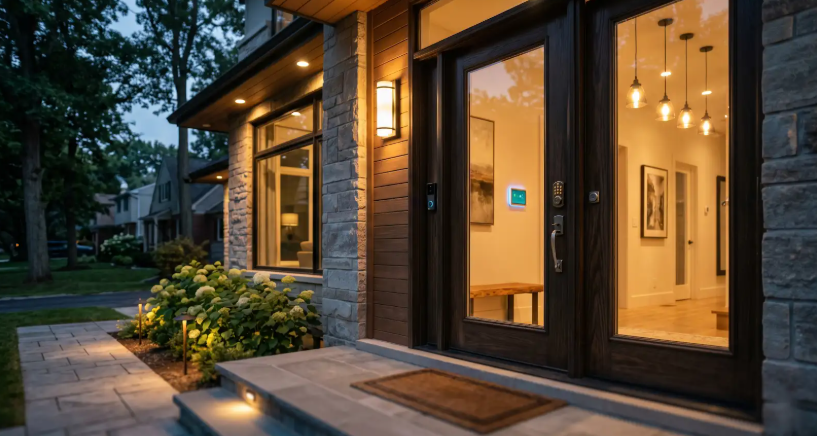
How Ambient Lighting Supports an Open-Concept Layout
Ambient lighting is the base layer. It gives the room its general level of light and helps the house feel settled once the sun goes down. In an Open-Concept Layout, that base layer has to do more than brighten the room. It has to carry continuity across the whole footprint.
This is where a lot of plans go wrong. People try to solve everything with ceiling lights alone. The result is usually even, but not especially graceful. The room becomes bright without becoming comfortable. There is enough visibility, but not enough atmosphere.
At Homeva, we think ambient lighting should make the space feel coherent first. It should support movement, give the eye a stable foundation, and let the rest of the layers add depth where the room needs it. Used well, it helps the house feel calm. Used too aggressively, it can flatten the entire plan.
Why Task Lighting Gives an Open-Concept Layout Precision
Task lighting is where the room starts responding to actual life. It gives focused support to the areas where people do things that need more clarity. Prep areas, reading corners, work surfaces, vanities, built-ins, all of those spaces ask for a different kind of light than the room as a whole.
In an Open-Concept Layout, this layer matters because the same room is rarely used in one fixed way. One part of the space may need sharp visibility while another part should stay relaxed. Task lighting makes that possible without forcing the whole room into the same intensity.
This is one of the reasons layered lighting feels so much better than a single bright ceiling plan. The room becomes more specific. The kitchen works like a kitchen. A breakfast bar feels usable in the morning. A reading chair still makes sense at night. The home starts feeling responsive rather than generic.
At Homeva, we look closely at how each part of the room is actually used. Lighting becomes much easier to get right when it follows behaviour instead of trying to overpower it.
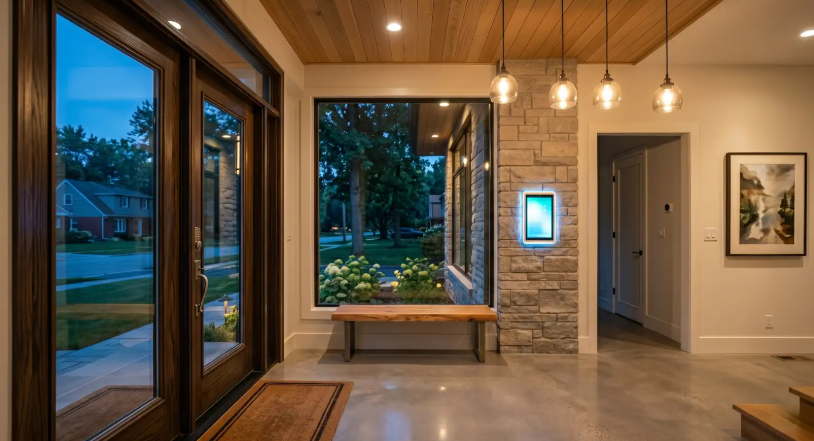
How Accent Lighting Gives the Room Depth
Accent lighting is often the layer that makes the whole space feel finished. It brings shape to surfaces, draws attention to details worth noticing, and gives the eye a place to rest. In a large connected room, that kind of depth changes everything.
Without accent lighting, an open plan can start to feel visually broad but emotionally flat. Walls disappear. Shelving loses character. Artwork looks incidental. Texture fades after sunset. The room still functions, but it does not hold attention in the same way.
With the right accent lighting, the house starts to read differently. Millwork feels richer. Architectural lines feel cleaner. Materials begin to show themselves again at night. That shift is subtle, but it is usually what separates a technically lit room from one that feels intentional.
At Homeva, we see accent lighting as one of the strongest tools for mood and architectural integration. It gives the room its depth without adding clutter to the design.
Why Fixture Count Is the Wrong Place to Start
A larger room often makes people assume they simply need more fixtures. That usually leads to a brighter room, not a better one. More light is not the same thing as better light. A long list of fixtures can still leave a space feeling unresolved if every source is trying to do the same job.
An Open-Concept Layout performs better when the layers are doing different work. Ambient light should hold the space together. Task lighting should support use. Accent lighting should bring dimension and mood. Once those roles are clear, the room starts making visual sense.
This is one reason we do not begin with a shopping list. We begin with the life inside the room. How the space moves. How it transitions from morning to evening. How it shifts from weekday use to entertaining. Lighting gets better when the plan starts there.
How Lighting Scenes Improve an Open-Concept Layout
One of the most overlooked parts of a strong lighting design is control. A room with beautiful layers can still feel awkward if those layers are hard to manage. In a connected space, the lighting should not force people into one mood all evening. It should adapt with them.
An Open-Concept Layout benefits enormously from lighting scenes because the same footprint needs to behave differently at different times. Morning light for movement is not the same as dinner light. Entertaining light is not the same as late-night quiet. Good scenes let the room shift naturally without asking the homeowner to manage each layer one by one.
At Homeva, we think this is where lighting starts feeling truly integrated into the home. The system should support the rhythm of the room without demanding attention for itself. A beautiful lighting plan deserves a control experience that feels just as resolved.
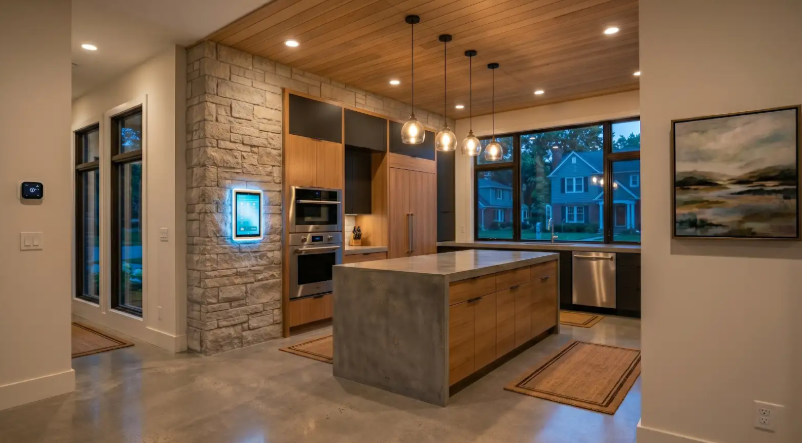
How We Approach Lighting at Homeva
We do not start with “what fixture looks best here?” We start with “how should this room feel, and how does it need to function?” That question usually leads to a better answer.
A connected kitchen, dining, and living area has to move through different moods over the course of a day. Morning activity, food prep, dinner, conversation, entertaining, quiet evenings, all of those states ask something different from the same footprint. Lighting has to respect that. It has to support use without losing softness and support mood without losing clarity.
At Homeva, our work in home lighting design is built around that kind of integration. We want the lighting to belong to the architecture, the routine, and the emotional tone of the home. A good plan should feel beautiful, but it should also feel easy to live with. The best result is rarely dramatic. It is usually the one that feels right without needing to announce itself.
The Best Open-Concept Layout Feels Unified, Not Uniform
That distinction matters. Uniform light tends to erase character. Unified light gives the room a shared language while still letting each zone keep its purpose. An open plan should not feel like one giant bright room. It should feel like one connected environment with rhythm, depth, and control.
That is the result we care about most at Homeva. Ambient lighting should carry the room. Task lighting should give it precision. Accent lighting should give it shape and atmosphere. When those layers work together, the home stops feeling like a collection of fixtures and starts feeling complete.
That is the better way to light an Open-Concept Layout. Not brighter for the sake of brightness. Not mood for the sake of drama. Just the right layers, in the right places, helping the architecture and daily life belong to each other. That is when lighting starts adding real value to the experience of the home.
FAQ
Why is layered lighting important in an open-concept layout?
Because one large connected space usually supports several activities and moods, not just one.
What is the difference between ambient, task, and accent lighting?
Ambient gives overall light, task supports focused use, and accent adds depth, emphasis, and mood.
Can recessed lights handle everything in an open plan?
Usually not. They help with base coverage, but they rarely create enough depth or atmosphere on their own.
Why do lighting scenes matter in open-concept spaces?
They let the same room shift naturally between cooking, dining, entertaining, and relaxing.
How does Homeva approach lighting design?
We design around function, mood, ease of use, and full-room integration rather than isolated fixtures.